Introduction
Ensuring fire safety in domestic dwellings is crucial for protecting lives, as fires can cause devastating consequences in these “sleeping risk” premises. Unfortunately, fire tragedies have repeatedly occurred in esidential buildings in Hong Kong, resulting in multiple deaths and injuries. Notable examples include the 1997 Mei Foo Sun Chuen Fire, the 2011 Fa Yuen Street Fire, the 2024 Jordon New Lucky House Fire and the recent Wang Fuk Court fire that occurred on 26 November 2025 and resulted in 168 deaths. Unfortunately, some of Hong Kong’s residential fire safety requirements originated from the 1950 to 1970 era and they appear to be inadequate to cope with the risks that we face today. One notable example is that fire detection in many of Hong Kong’s residential buildings is not automatic, implying that residents need to manually activate the fire alarm in case of fire. Another example is high-rise residential buildings. In both the UK (ref. 1) and Chinese Mainland (ref. 2), residential buildings, if they exceed the concerned jurisdiction’s height limit, are required to be equipped with automatic sprinklers, but in the case of Hong Kong, they are not required.
With the above phenomenon in mind, through this article, the author aims to analyse the problems of Hong Kong’s residential buildings and to propose feasible solutions.
The Problems
Materials used in renovation works
With ageing of residential buildings, external wall renovation using scaffolds is often seen in Hong Kong. However, when such scaffolding extends from the ground to the roof, it could become a deadly fire propagation path that bypasses all the fire compartmentation. The scaffolds may be on the building envelope or in a light well. In the case of some light wells or certain critical locations on the building envelope (Fig. 1), the scaffolding is located right next to the windows of fire escape staircase, meaning that if a fire comes in from the scaffold, the smoke would fill up the entire stairway, resulting in a total failure of the means of escape. This kind of failure could occur as the scaffolds may consist of flammable materials such as the plastic kick plates surrounding the working platforms.
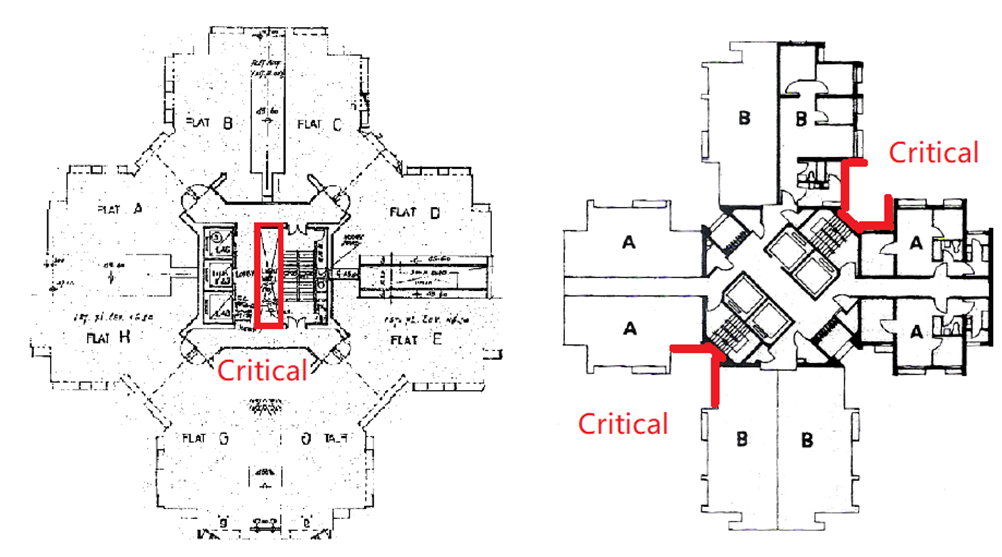
Figure 1 – Critical scaffold locations that affect staircases
Besides the scaffolding, the protective nets are also problematic as they are not durable and often need replacements after typhoons. It is difficult to ascertain all the nets used on a site are fire retardant. Yet there is also a deteriorating problem – the fire retardant capability of the nets would drop after a prolonged period of use in the outdoor (ref. 3).
Worst still, some contractors would use polystyrene boards to cover up the window glass panes in order to protect them from damage during external wall refurbishment. Renovation contractors may use external wall spraying agents (e.g. waterproofing sealants) that contain flammable substances. These materials would lead to fire risks.
Lack of protection for outdoor areas
Currently, Hong Kong’s fire service installation requirements focus on tackling fires in areas under roofs. Other kinds of areas that are also risky include light wells and re-entrants. In some cases, these areas are used for providing windows for fire escape staircases (Fig. 1). In other cases, a building layout may incorporate a large central cavity in which the outdoor units of air-conditioners are placed or where kitchen windows open into. As for re-entrants, Towngas or Liquefied Petroleum Gas risers are usually located at these spaces, meaning that there is an explosion risk in case of gas leakage or externally induced fire. Besides, debris and municipal waste often accumulate at the bottom of re-entrants. In extreme cases, the bottom of light wells or re-entrants are used by contractors for storing tools and materials. The Jordon New Lucky House Fire is one past example of fires related to materials stored in the light wells. The recent Wang Fuk Court Fire also reinforces the awareness about “stack effect” occurring in re-entrants. One recent literature (ref. 4) reveals that relative to open-fire scenarios, cavity fires in buildings could result in up to 10 times higher flame spread.
Unfortunately, the current Fire Services Department Code of Practice for Minimum Fire Service Installations and Equipment in Hong Kong does not require any fire service installations to be provided for the re-entrants or light wells.
Underestimated risks in residential buildings
In the past, domestic dwellings were regarded as low risk so they were not required to be equipped with automatic fire sprinklers, both in the UK and Hong Kong. However, as experience accumulates, the UK now requires new residential buildings over 11m tall (about 4 storeys) to be equipped with sprinklers (ref. 1). This has been particularly spurred by high-rise residential fires such as the 2017 Grenfell Tower fire. In the Chinese Mainland, sprinklers and detectors are also required to be installed in high-rise residential buildings exceeding 100m in height (about 33 storeys) (ref. 2). Again, a high-rise residential fire that occurred at Jiaozhou Road of Shanghai in 2010 was one of the triggering factors (ref. 5). Unfortunately, the same tightening of requirements has not yet been implemented in Hong Kong, except that sprinklers are required in the kitchen zone if the flats adopt open kitchen design. This situation appears to be unreasonable as the risk of Hong Kong should be higher than that of the UK/Mainland due to the following reasons: (i) The living density of Hong Kong is higher, meaning that there are more people and more materials stored per unit apartment area; (ii) Super-tall and curtain-walled residential buildings are more commonly built in Hong Kong, implying that the difficulty of fire rescue is higher; (iii) Hong Kong’s population is ageing more severely than the UK/Chinese Mainland due to higher life expectancy of Hong Kong people. With an aged population inside dwellings, sensitivity to fire alarms (due to deterioration in hearing ability) and readiness to evacuate are both lower. The latter problem has become obvious from the recent Wang Fuk Court Fire.
The Solutions
In order to tackle the above three major problems, the author would like to propose the following solutions:
Improved scaffolding components
In the Chinese Mainland, construction of new residential buildings typically adopts a kind of external climbing scaffolds made of metal. Only the top four storeys need to be covered with scaffolds, with the lower storeys all exposed to view. This is due to the use of multi-task construction sequencing, meaning that the top four storeys are undergoing critical processes like concrete pouring, formwork removal, propping and window installation, while the lower exposed floors have transited to a less critical stage like partitioning and internal fitting-out. For details, readers may refer to Ref. 6.
There are many benefits from the above method: (i) There is no fire propagation path that runs from the ground to the top floor; (ii) The entire system, including the blue-coloured perforated plate scaffold barrier, is made of metal, meaning that there is full assurance that it would not burn in case of a fire; (iii) The degree of worker safety is higher. (iv) It can be reusable, so it is environmentally favourable.
In December 2024, the author observed that a new hospital project in Hong Kong was piloting the use of the perforated plate scaffold barrier (Fig. 2). Although it was not a climbing type, the replacement of flexible net by rigid barrier could be viewed as a significant improvement in quality, safety and environmental protection. If this scaffold is to be used in a “Climbing” configuration on existing buildings, it may require the erection of two running rails, one on each side, in order to provide support to its weight and to establish a path of movement. However, there would be significant fire safety benefits, especially the prevention of a fire propagation path all the way from ground to the top floor. Besides, unlike fire retardant material for nets that cannot be discerned by eyes, the use of perforated metal plates is an adequate assurance that they are in no way combustible.
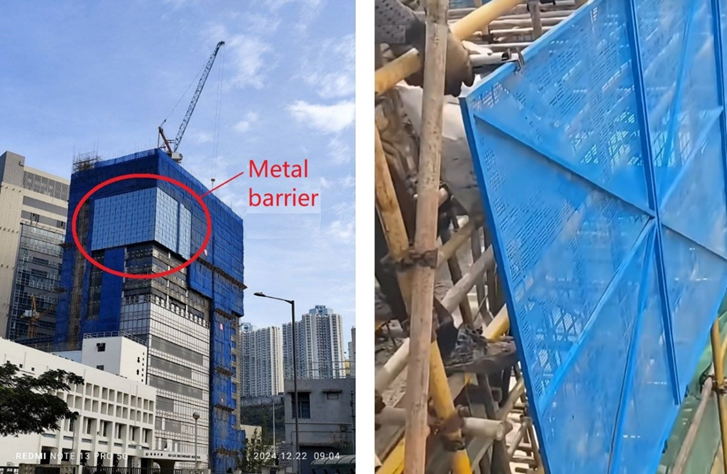
Figure 2 – Metal protective barriers for scaffolding
As for polystyrene boards that are used by some incompetent workers to cover window glass, they should be replaced by incombustible materials such as aluminium sheets or gypsum boards.
Water spray nozzles above light wells and re-entrants
Just like the fact that an automatic sprinkler head is required to be installed at the top of a refuse chute (Fig. 3 - LHS), the author is of the opinion that a similar device should be installed at the top of light wells and re-entrants. Since light wells and re-entrants do not have a ceiling, they are unable to trap the heat in case of a fire, so the use of sprinkler heads with glass bulbs that burst in case of high temperatures is not feasible. Instead, a set of open-outlet spray nozzles should be adopted (Fig. 3 – RHS). A motorised valve would open in case of fire to let water go into the inlet of the nozzles. The mechanism to trigger the motorised valve could be any form of devices suitable for the light well or re-entrant situation, such as a beam detector (a device that shoots infrared beam across the well to detect the presence of smoke) or a camera device that monitors the recess space using AI or video analytics. If a fire is detected in the light well or re-entrant, such as when a cigarette ignites the clothes hung on a drying rack, water would be sprayed onto the fire via the nozzles. In fact, there has been significant academic and technical research (e.g. ref. 7 and 8) focusing on water-based fire suppression methods for exterior façade fires. One notable researcher is the China Academy of Building Research (CABR), which has produced a dedicated external wall fire suppression system (Fig. 4) for retrofit use in existing buildings (ref. 9).
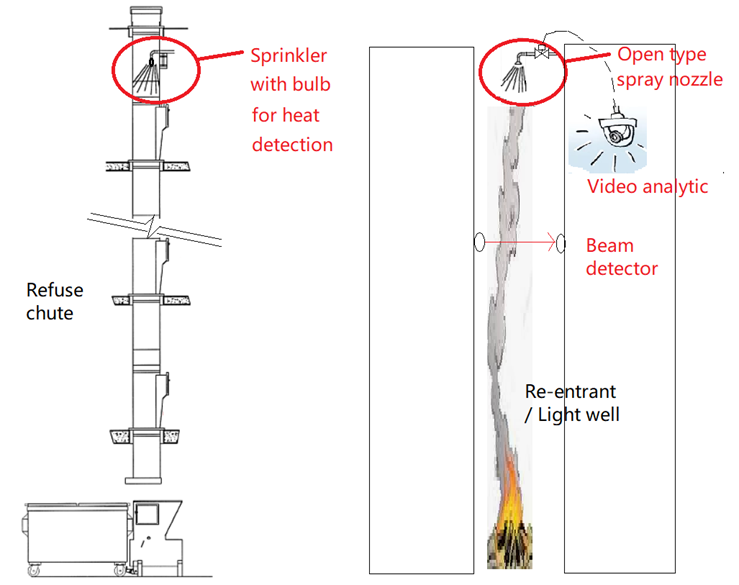
Figure 3 – Fire protection at refuse chute and re-entrant/light well
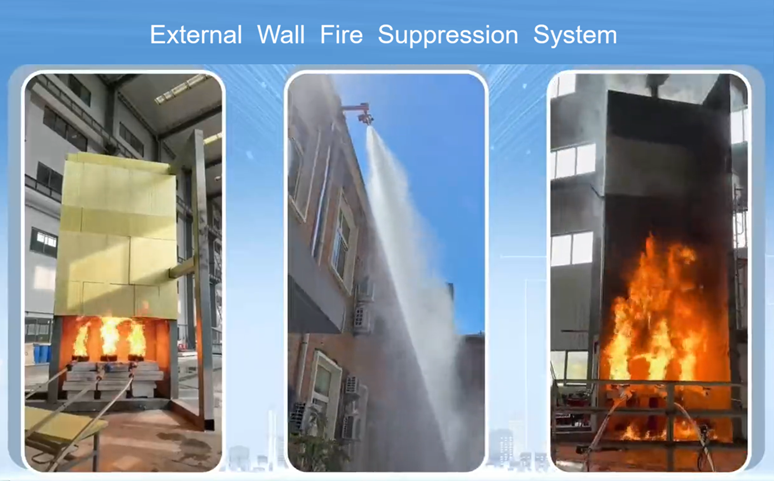
Figure 4 – Dedicated external wall fire suppression system (ref. 9)
For existing buildings, one may query the feasibility of adding a water tank for feeding the spray nozzles as existing buildings have many structural constraints. However, Hong Kong Fire Services Department already has a practice of accepting improvised sprinkler system for certain existing buildings where the water source for the sprinklers may be directly from the town main (for low rise buildings), from the existing fire hydrant/hose reel system, or from a reduced-capacity sprinkler tank. The same solution may be applied to the above spray nozzle system.
In fact, if bamboo scaffolding needs to be installed on the irregular-shaped external walls of an existing building, the above spray nozzle system may also be installed as a temporary installation above the bamboo scaffolding. This is like the anti-theft flood lighting that often accompanies the scaffolds erected on existing buildings.
Enhanced fire service installations for residential buildings
Like the practice in the UK and the Chinese Mainland, Hong Kong should require new high-rise residential buildings to be equipped with sprinklers, no matter they adopt open kitchens or not. In fact, it is quite common that many families dismantle the kitchen doors when they move in a new flat, or even if the doors are kept, users would jam open the doors or dismantle the auto-door closers. Other new and innovative design practices for residential buildings that are worth exploring include –
(i) Staircase pressurization for unvented staircases
(ii) Automatic shut-off valve for Towngas inside each flat, which is linked to a gas/fire detector
(iii) Designation of an emergency refuge room inside each flat (e.g. bedroom with fire-resisting door)
(iv) Mandating the use of electric cooking if open kitchen is adopted (this requirement is already imposed in some parts of Chinese Mainland through the rules of gas supply companies)
For existing buildings, it may be difficult to implement the suggestions for new buildings, but there are other means to improve fire safety, such as: (i) standalone or IoT fire detectors with sounder bases to be provided throughout each flat; (ii) IoT fire alarm bell inside the flat to assist the hearing-impaired elderly; (iii) a portable fire extinguisher near the flat door and a fire extinguishing blanket in each kitchen; (iv) smoke filtration face masks and fire escape cloaks for all the family members. An APP can also be installed in each resident’s mobile phone to enable fire evacuation message to be transmitted to him or her when there is a fire.
As for other measures to enhance the safety of existing buildings, fire detectors should be retrofitted at the common corridors. Besides, IoT door sensors may be retrofitted at every smoke door to ensure it is kept closed, while the furniture and finishes of ground floor entrance lobby should be carefully checked to ensure they have suitable anti-fire-spread properties. Based on Hong Kong’s refuge floor requirement, in buildings with 25 storeys or above, the roof should be checked to ensure there are no solar panels or other obstructions that would prevent the roof from being used as a refuge floor. There is also a need to strengthen property management practices, such as escalating the approval authority for suspending fire alarm devices, daily patrol of escape routes and a mandatory enforcement of maintaining the self-closing function of each flat’s entrance door. In old buildings where the windows of stair well are fixed glass that cannot be opened, modifying them to openable windows is highly recommended.
If the government wishes to improve the situation further, an improvised fire sprinkler system may be retrofitted in existing buildings by adding a set of sprinkler pipes that originate from the existing hose reel in each lift lobby. The pipe network should end up with a sprinkler head above each flat entrance door, or it may go into the flat and terminate with a sidewall sprinkler (Fig. 5). Sidewall sprinklers, which may be concealed within walls or small bulkheads, are particularly suitable for dwellings as there is no need to install a large zone false ceiling as in the case of pendant type sprinklers (Ref. 10). The purpose of this installation is to prevent the propagation of fire from the flat to the common corridor. In terms of control, a flow switch would need to be retrofitted in the branch pipe so that when any sprinkler head bursts, the switch would sense it and command the fire pump to commence operation without waiting for residents to activate the break-glass unit. In this way, the fire fighting system is converted from manual operation to automatic operation.
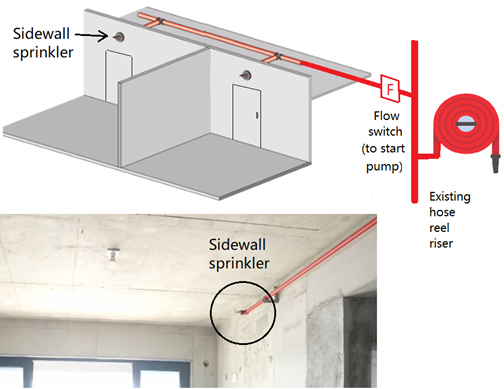
Figure 5 – Improvised sprinkler system for homes
Regulatory framework
The author is of the opinion that four tiers of regulatory framework should be in place to safeguard the fire safety of a high-density city. Tier 0 is the framework that governs the design of new buildings and the improvement of existing buildings, as discussed above. Tier 1 is the framework that governs the operation, inspection and maintenance of fire safety related hardware. Improvement suggestions are also discussed above – the main idea being the extension of the coverage from fire service installations to static components like fire doors of kitchens, flat entrances and escape staircases. Tier 2 is management control, e.g. who has the authority to approve the suspension of fire service installations and who is responsible for supervising the work of maintenance contractors. Tier 3 is audit. In Hong Kong, safety audits are mandatory for large industrial undertakings and large construction sites, but there is no requirement for conducting fire safety management audits in existing buildings. Such audits may ascertain, e.g. whether there is a system in place to evaluate the performance of maintenance contractors, and whether there is a system to evaluate the effectiveness of fire drills and derive continuous improvements, etc. For details about the above suggestions, readers may refer to Ref. 11.
Conclusion
The lessons learnt from past residential fires are costly. The society cannot wait any more to see the residential fire safety code escalate to a more appropriate level. Now consulting engineers, contractors, equipment and material suppliers as well as authorities having jurisdiction need to work together to derive innovative and effective solutions that could attack the roots of the problems. This article has attempted to analyse the key fire safety problems faced by Hong Kong’s domestic dwellings and suggested corresponding solutions. It is hoped that it would trigger the various parties to bring these solutions into fruition so that our high-density city would become much safer.
References
1. UK HM Government (2019). Approved Document B (Fire Safety) – Volume 1: Dwellings.
2. Ministry of Housing and Urban-rural Development and State Administration for Market Regulation of China (2022). GB 55037-2022: General Code for Fire Protection of Buildings and Constructions.
3. Vahabi, H., Sonnier, R., and Ferry, L. (2015). Effects of ageing on the fire behaviour of flame-retarded polymers. Polymer International, 2015, 64(3), 313-328.
4. Godakandage, R., Weerasinghe, P., Gamage, K., Adnan, H. and Nguyen K. (2023). A systematic review on cavity fires in buildings: flame spread characteristics, fire risks, and safety measures. Fire, December 2023, 7(1)
5. Peng, L., Ni, Z. and Huang, X. (2013). Review on the fire safety of exterior wall claddings in high-rise buildings in China. Procedia Engineering 62 (2013), 663-670.
6. Lau, E.W.T. (2020). Twelve less-mentioned techniques of building industrialisation. Hong Kong Engineer – Vol. 48.
7. Meraner, C., Skilbred, E.S. and Arsava, K.S. (2024). Experimental investigation of water-based fire suppression systems on external façade fires. Fire Technology, 60, 3629-3648.
8. Xin, Ben-shun (辛本順) (2019). A fire-extinguishing and cooling system for exterior façades of high buildings (高層建築外立面設置滅火冷卻系統方案探討) – an on-line article available in WeChat, accessed 25 April 2026.
9. China Academy of Building Research (CABR) (2025). CABR 365 Good housing system – Typical outcome (1) – Comprehensive solutions for renovating existing residential buildings (中国建研院365好房子体系典型成果一 : 既有住宅好房子改造综合解决方案) – an on-line article and video available in WeChat, accessed 25 April 2026.
10. British Standards Institution (2021). BS 9251:2021 – Fire sprinkler systems for domestic and residential occupancies – Code of practice.
11. Lau, E.W.T. (2008). Improving fire safety of buildings in Hong Kong. Hong Kong Engineer – Vol. 36.
About the author:
Ir Dr Eddy WT Lau is a Fellow of the Hong Kong Institution of Engineers in the Building Services Discipline. From 1998 to 2007, he worked in the Kowloon-Canton Railway Corporation as a Building Services Engineer. Upon the railway merger in 2007, he was transferred to the MTR Corporation Ltd, working as a Lift, Escalator and Fire System Design Engineer till retirement in 2012. He was a Professional Member of the SFPE from 2007 to 2012.