Gabriele Campi, MS in Mechanical Engineering, SUPSI
As buildings move toward a low-carbon future, Building Integrated Photovoltaics (BIPV) are becoming a cornerstone of sustainable design. These systems transform roofs and façades into energy-generating surfaces, combining architectural function with renewable power production [1].
But as with many emerging technologies, innovation introduces new challenges. Among them, fire safety is rapidly becoming a critical concern [2], especially with the rise of lightweight photovoltaic panels.
Unlike traditional glass-based solar panels, lightweight PV modules rely heavily on polymeric materials. These include thin plastic films that replace glass layers, significantly reducing weight and enabling installation on structures that could not otherwise support conventional systems.
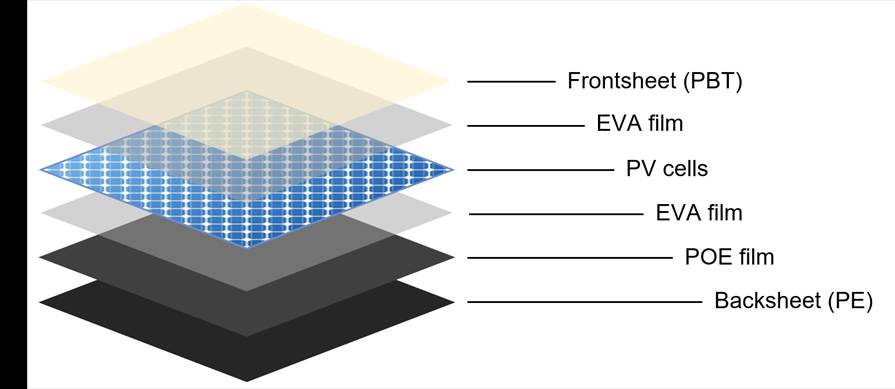
Figure 1. Typical structure of a lightweight photovoltaic panel based on polymeric layers.
This flexibility opens new possibilities:
· Retrofitting older buildings
· Integrating solar into façades
· Expanding solar adoption in urban environments
From an engineering perspective, lightweight PV represents a major step forward. However, from a fire safety perspective, it raises an important question: What happens when these materials are exposed to fire? The answer is highly dependent on material selection, panel architecture, and integration strategy.
Several real-world fire incidents involving photovoltaic systems have already highlighted the potential risks [3]. While not all are linked to lightweight panels specifically, they underscore a broader issue: PV systems are not inherently safe in fire scenarios [4].
The concern with lightweight PV lies in its composition (Fig. 1). These panels are made of multiple layers, including:
· Encapsulants (such as Ethylene-Vinyl Acetate [EVA] and Polyolefin Elastomer), which bind components together.
· Frontsheet (Polybutylene Terephthalate) and backsheet films (Polyethylene), providing protection and insulation.
· Photovoltaic cells, which generate electricity.
While the cells themselves are mostly inorganic, the surrounding materials are highly flammable polymers [5,6]. In conventional panels, glass acts as a barrier that slows down fire spread. Whereas in lightweight designs, this protection is often reduced or entirely absent.
The result is that certain lightweight configurations, particularly those with a high polymeric content and limited inorganic barriers, may be easier to ignite, capable of sustaining combustion, and potentially able to accelerate fire growth.
Investigating Fire Behavior: From Materials to Systems
To better understand these risks, this research project, funded by the SFPE Foundation and conducted at the University of Applied Sciences and Arts of Southern Switzerland (SUPSI), explored how lightweight PV systems behave under fire conditions. The study was designed to investigate representative engineering configurations rather than to benchmark the full range of commercially certified products.
At the core of this work is the Mini Single Burning Item (Mini SBI), a laboratory-scale fire testing apparatus developed at SUPSI to evaluate the reaction-to-fire performance of materials using reduced-size specimens [7] (Fig. 2). This unique tool allows researchers to bridge the gap between small-scale material testing and real-scale fire behavior.
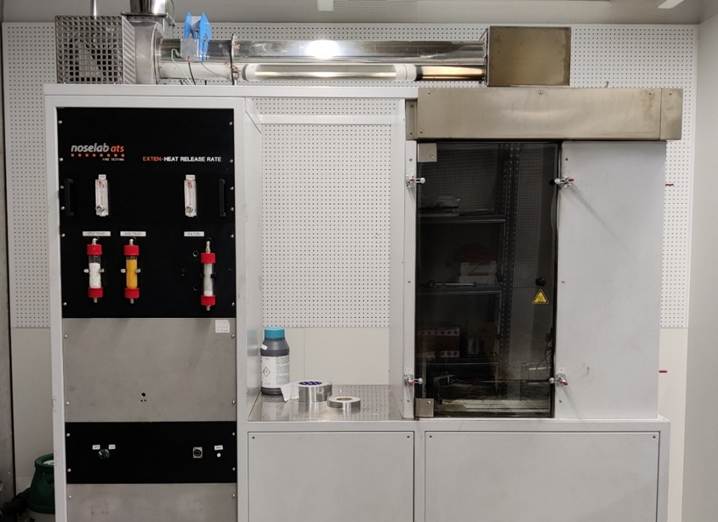
Figure 2. Mini Single Burning Item (Mini SBI) apparatus developed at SUPSI for fire testing [7].
The Mini SBI is derived from the standard SBI test (EN 13823 [8]) but allows faster and more flexible testing while maintaining strong correlation with full-scale behavior. Using this method, key fire parameters can be measured, including Heat Release Rate (HRR), Fire Growth Rate (FIGRA), and smoke production.
The research followed a multi-scale approach, testing individual polymer films, photovoltaic cells, and complete panel assemblies.
The evolution of a PV panel during testing, from ignition to full combustion, provides a clear visual understanding of the process (Fig. 3).

Figure 3. Evolution of a photovoltaic panel during fire testing.
At the material level, the results were clear: not all components behave the same way.
In the tested configurations, encapsulants such as EVA and POE showed the most challenging behavior from a fire safety perspective, with rapid ignition, high heat release, and significant smoke production [5,6]. EVA also exhibited melting and dripping, a key mechanism for flame spread.
Protective films contributed less to heat release but still generated substantial smoke, while photovoltaic cells showed limited combustion but non-negligible smoke production.
The physical degradation of these materials after testing highlights their different behaviors (Fig. 4).
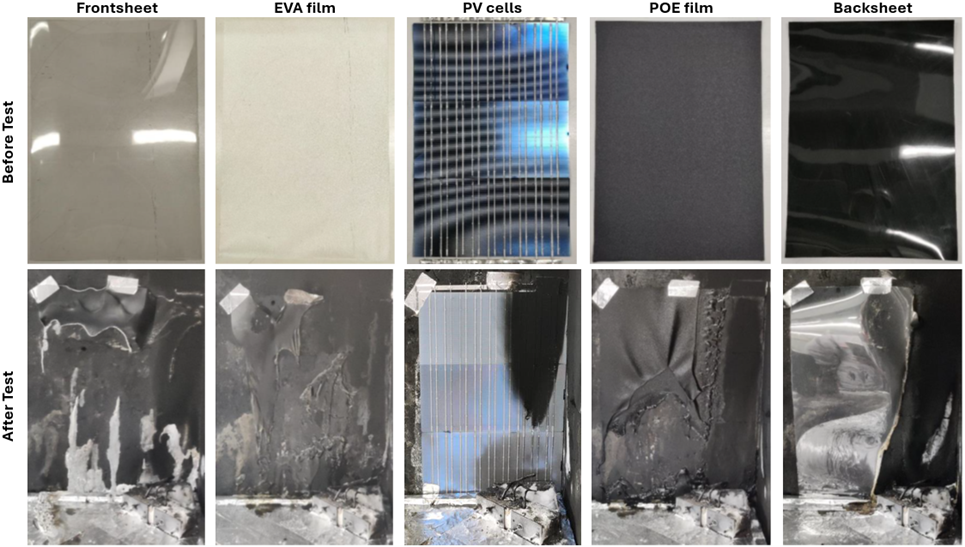
Figure 4. Residual polymer films before and after fire testing, showing melting and degradation behavior.
One of the most important findings of the study was what happens when these materials are combined. Individually, polymer films release moderate amounts of heat. However, when assembled into a full panel, their effects are not simply additive; in the tested configurations, they are amplified. This “scale effect” is clearly illustrated by comparing the HRR across all tested specimens. While individual materials remain below 1 kW, the full lightweight panel exceeds 5 kW, demonstrating a non‑linear increase in fire intensity at the system level (Fig. 5).
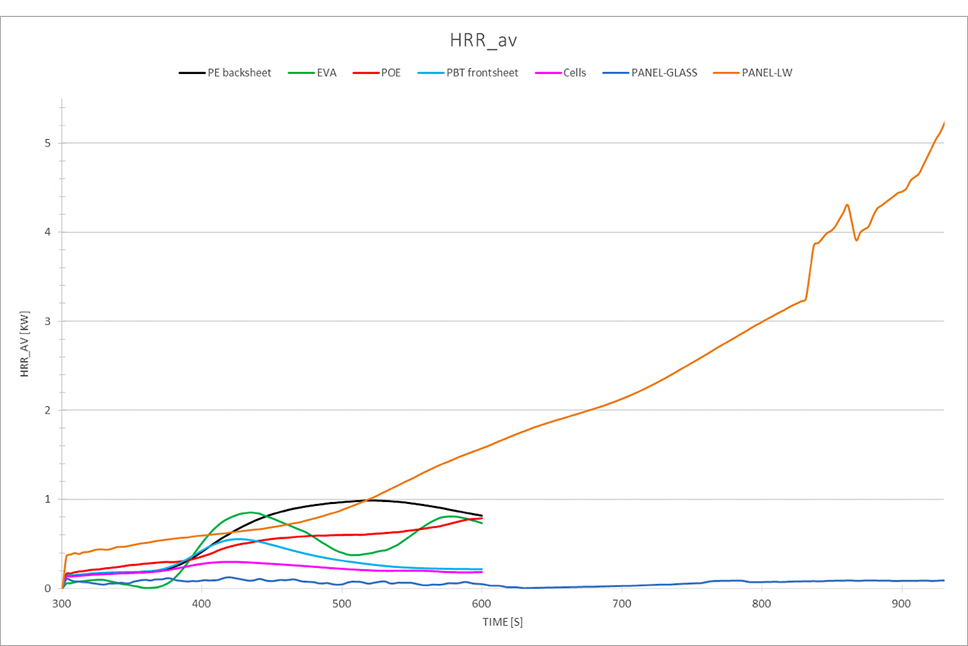
Figure 5. Comparison of Heat Release Rate (HRR) across films, cells, and full panels.
It should be noted that different time windows are reported for individual components and assembled systems.
For polymer films and photovoltaic cells, the analysis is limited to 600 seconds (s), encompassing the ignition phase and the peak HRR for these small-scale specimens. Beyond this time, combustion of individual layers is either completed or no longer representative of sustained fire behavior.
In contrast, tests on assembled panel systems were extended beyond 600 s to capture their prolonged combustion dynamics. In these configurations, the interaction between multiple layers and the greater combustible mass results in delayed peak and sustained heat release, requiring longer observation times to fully describe system-level fire behavior.
The study compared two representative designs of assembled panel systems:
A. A fully polymeric lightweight panel
B. A glass-sandwiched panel, where the same materials were enclosed between glass layers
The results could not have been more different. In the tested configuration, the all-polymer panel (A) showed continuous increase in heat release, sustained combustion and extensive smoke production. During the test, the panel was almost completely consumed. The structure lost integrity and burning droplets were observed, indicating potential challenges for fire safety in building‑integrated applications, which require careful design and validation.
In contrast, the glass-sandwiched panel (B) remained largely intact. Even though the glass cracked under thermal stress, it continued to act as a barrier, limiting flame penetration and reducing heat release.
A direct comparison of the two post-fire conditions in Fig. 6 highlights this difference.
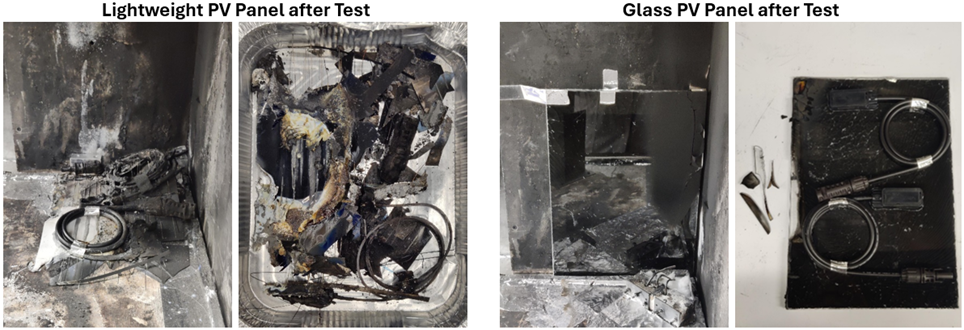
Figure 6. Post-fire comparison between lightweight polymer panel (left) and glass-sandwiched panel (right).
While the lightweight panel is completely consumed, the glass panel maintains its structure thanks to the “shatter-and-hold” effect, where fractured glass remains bonded within the laminate.
Why This Matters for Buildings
These observations have important implications for real-world applications.
In BIPV systems, panels are often installed directly on façades or rooftops. This means that:
· Fires can spread vertically along building surfaces
· Burning droplets can ignite materials below
· Smoke can quickly enter occupied spaces
Some lightweight panel configurations, particularly those without protective glass layers, may contribute to the overall fire load rather than behaving as purely passive components [4,9].
Toward Safer Solar Design
The good news is that solutions already exist, and more are emerging. We are seeing:
· Material Improvements, e.g., flame-retardant encapsulants, smoke-suppressing additives, and modified polymer formulations
· Structural Strategies, e.g., incorporation of glass layers (even ultra-thin), hybrid designs combining polymers with inorganic barriers, and coatings that limit ignition and dripping
· System-Level Design Improvements, e.g., panel layouts that interrupt flame spread, safer mounting systems, and integration guidelines for façades and roofs [9]
The industry is addressing fire safety challenges. For instance, in recent years, manufacturers have started developing flame-retardant polymeric films and encapsulants specifically designed for lightweight photovoltaic applications. Rather than being neglected, fire safety is being actively integrated into product development through emerging solutions that reduce ignition propensity, limit flame spread, and mitigate dripping behavior.
Looking Ahead
Lightweight photovoltaic technology is here to stay. Its benefits in terms of sustainability, flexibility, and architectural integration are too significant to ignore. However, as highlighted by recent research efforts, innovation must be accompanied by rigorous fire safety assessment.
The findings presented here are based on a limited set of materials and configurations and should be interpreted as a contribution to an ongoing and inherently complex design space rather than as a definitive assessment of all lightweight PV solutions.
Final Thoughts
This study provides an experimental insight into how lightweight photovoltaic systems behave under fire exposure, progressing from individual polymeric components to assembled panel configurations. Using the Mini SBI methodology, the tests clearly show that while single materials exhibit limited heat release at small scale, their combination at the system level can lead to a non-linear increase in fire intensity and sustained combustion.
The comparison between the fully polymeric lightweight panel and the glass‑sandwiched configuration highlights the decisive role of panel architecture. In the tested configuration, the absence of an inorganic barrier resulted in prolonged heat release, dripping, and loss of structural integrity, whereas the introduction of glass significantly limited fire development by acting as a protective barrier.
Overall, the results emphasize that fire performance in lightweight photovoltaic systems is governed not only by material chemistry, but by the interaction between materials, stacking sequence, and system‑level design. These findings support the need for fire safety to be addressed as an integral part of lightweight PV design, through informed material selection, hybrid architectures, and validation at the system scale.
References
[1] SolarFunda. Building Integrated Photovoltaics (BIPV).
[2] Slovenian Business & Research Association. Mitigating fire risks related to implementation of European Green Deal.
[3] U.S. Department of Energy. A Guide to Fire Safety with Solar Systems.
[4] International Energy Agency (IEA). Report IEA-PVPS T15-15:2023.
[5] Yang, H.Y. et al. Experimental Studies on the Flammability and Fire Hazards of Photovoltaic Modules. Materials vol 8(7).
[6] Yin, L. et al. Combustion Behaviors of CIGS Thin-Film Solar Modules from Cone Calorimeter Tests. Materials vol 11(8).
[7] Castrovinci Andrea, De Corso Anna Rita. Mini Single Burning Item [Mini SBI]: a unique lab-scale device to pre-screen reduced specimen for the EN 13823.
[8] SBI; European Standard - Reaction to fire tests for building products - Building products excluding floorings exposed to the thermal attack by a single burning item; EN 13823.
[9] FRISSBE / ZAG. Fire Safety Guideline for Building Applied Photovoltaic Systems on Flat Roofs.