2024 ITB-FRISSBE Summer School on Fire Fundamentals for Performance-Based Fire Safety Design
By: Andrea Lucherini, Department for Fire-Safe Sustainable Built Environment (FRISSBE), Slovenian National Building and Civil Engineering Institute (ZAG), Slovenia
Bogdan Racięga, Baltic Fire Laboratory (BFL), Poland
Wojciech Węgrzyński, Instytut Techniki Budowlanej (ITB), Poland
Grunde Jomaas, Department for Fire-Safe Sustainable Built Environment (FRISSBE), Slovenian National Building and Civil Engineering Institute (ZAG), Slovenia
Summer School: general information and participants
After brainstorming about the needs faced by early-career researchers and fire professionals, a group of established researchers from the Slovenian National Building and Civil Engineering Institute (ZAG) and the Instytut Techniki Budowlanej (ITB) decided to organise the 2024 Summer School on Fire Fundamentals for Performance-Based Fire Safety Design.
The Summer School was organised in 5 days (1st - 6th September 2024) for teaching and learning activities in Warsaw, plus an additional day of learning in Gdansk (7th September 2024). The content was delivered as a mix of lectures, discussions, practical demonstrations and case studies, all in English. The lead organizers from FRISSBE (ZAG) were Prof Grunde Jomaas and Dr Andrea Lucherini, while Dr Wojciech Węgrzyński was leading things for ITB. The program in Gdansk was put together by Bogdan Racięga from the Baltic Fire Laboratory (BFL). The program is shown in Figure 2.
The participants were mainly early-career fire science researchers (PhD students and postdoctoral researchers) and practitioners in fire safety engineering. In their motivation letters, they expressed that they wanted to challenge and strengthen their fundamentals, extend their knowledge, analyse practical examples and recent innovative applications, discuss emerging challenges, and learn more about performance-based fire safety design in general. In total, the Summer School cohort had 48 participants with a diverse background, interests, profession, geographical location (30+ countries), and gender.
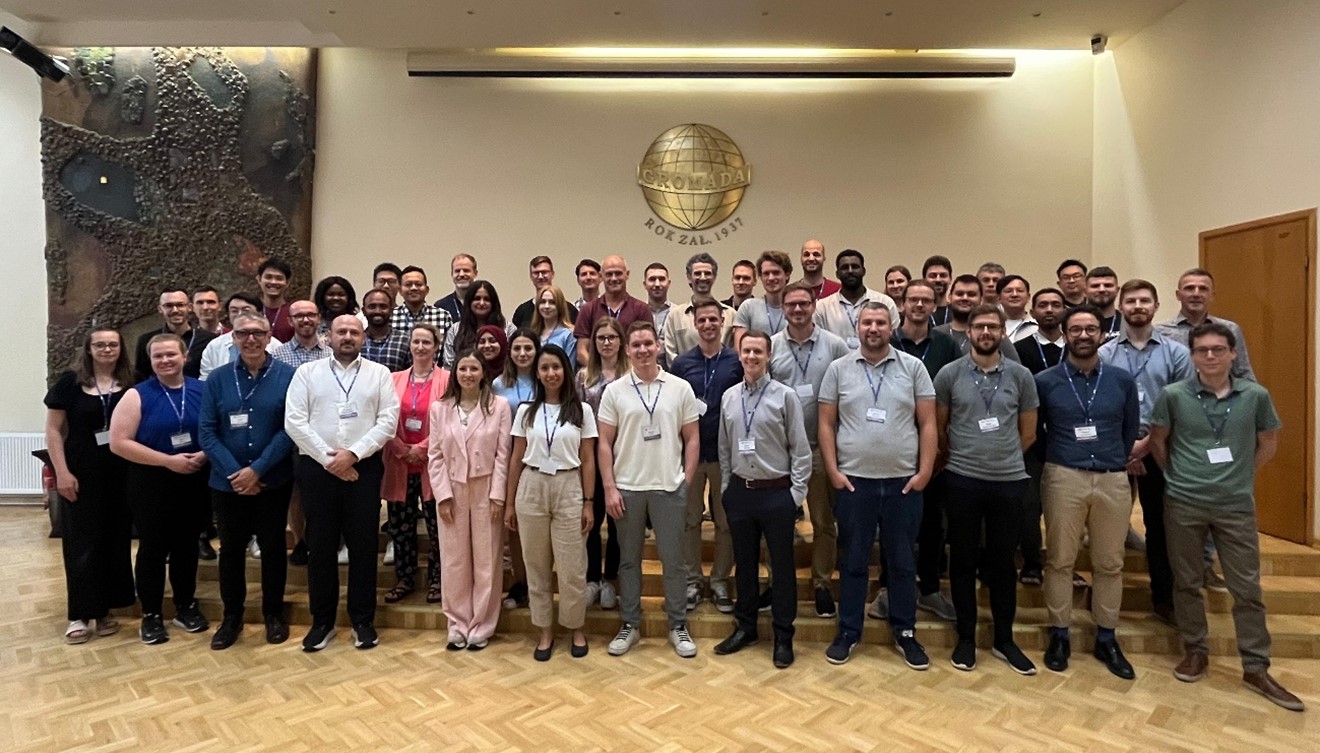
Figure 1. Summer School group picture on the first day of lectures in Warsaw.
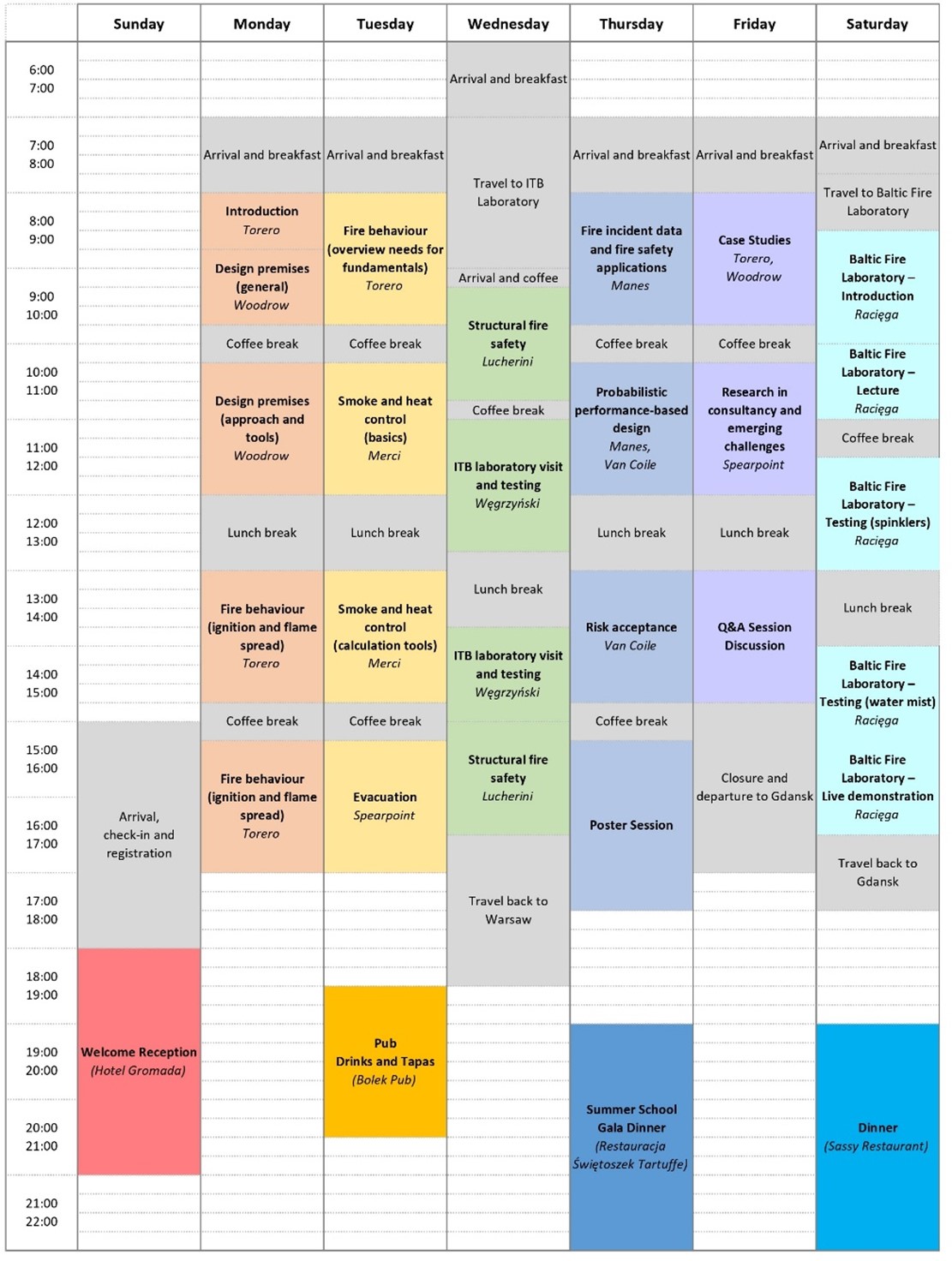
Figure 2. Summer School program.
The course was unique in its contents and structure, offering a coherent programme focused on high-quality performance-based fire safety design approaches and tools. Though several frameworks for performance-based design exist, the focus for the summer school was on employing scientific approach to the performance problems, the participants were informed on the first day. To achieve that, the required fundamentals were taught throughout the week by well-renowned lecturers, experienced in both academia and fire safety design. The lecturers were Dr Andrea Lucherini (FRISSBE-ZAG, Slovenia), Dr Martina Manes (University of Liverpool, UK), Prof Bart Merci (Ghent University, Belgium), Dr Michael Spearpoint (OFR Consultants, UK), Prof José L. Torero (University College London, UK), Dr Ruben Van Coile (Ghent University, Belgium), and Dr Michael Woodrow (University College London, UK). All the lecturers were also available for the entire week for personal discussions with the participants, who were offered a very low student to lecturer ratio. This fostered a dynamic and engaging learning environment that all the participants have highlighted as unique and valuable.
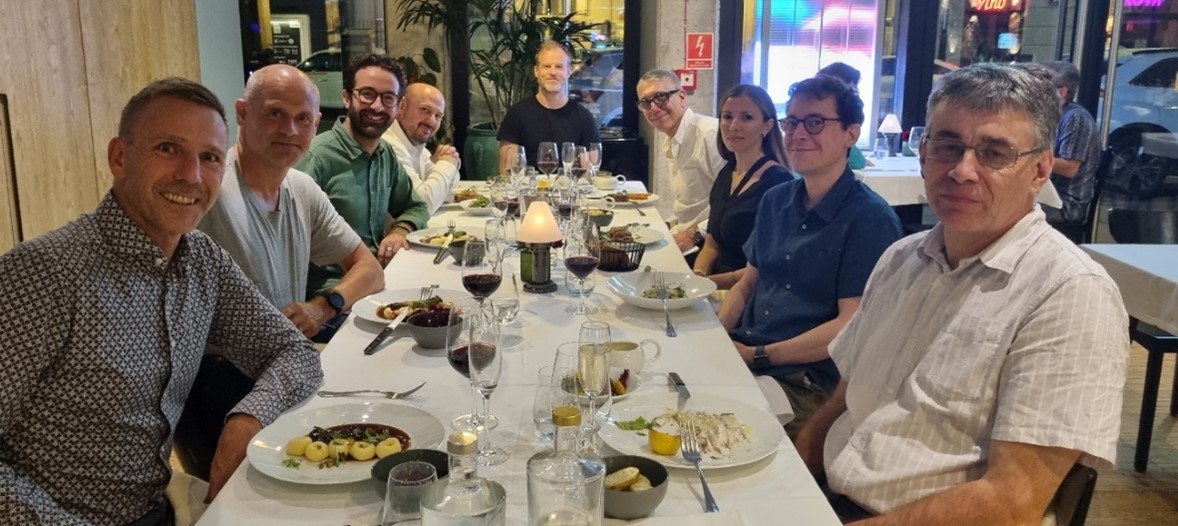
Figure 3. Summer School lecturers’ dinner – from left to right: Grunde, Bart, Andrea, Wojciech, Michael W., Jose, Martina, Ruben, and Michael S.
The students undertaking the Summer School were taught how to engage, as fire safety engineers, with the building design process in a manner that they can make best use of information, data and tools to deliver a fire safe building. The students learnt how to understand and appreciate their role within a design team as well as the roles of others (i.e., architects, civil engineers and mechanical engineers). The students also became familiar with the tools, data and information available and understood when it is appropriate or not to use various tools, data and information. However, the focus was on defining good objectives for the performance-based design and applying correct methods to the problems, rather than technical aspects of specific tools. Thus, the students gained a broad appreciation of how the design process fits within the general principles of a regulatory framework.
Figure 4. Teaching and discussion moments during the Summer School.
Poster session
The Summer School had a poster session with presentations and discussions led by the Summer School participants and with participation of all Summer School lecturers. Two best poster awards were given.
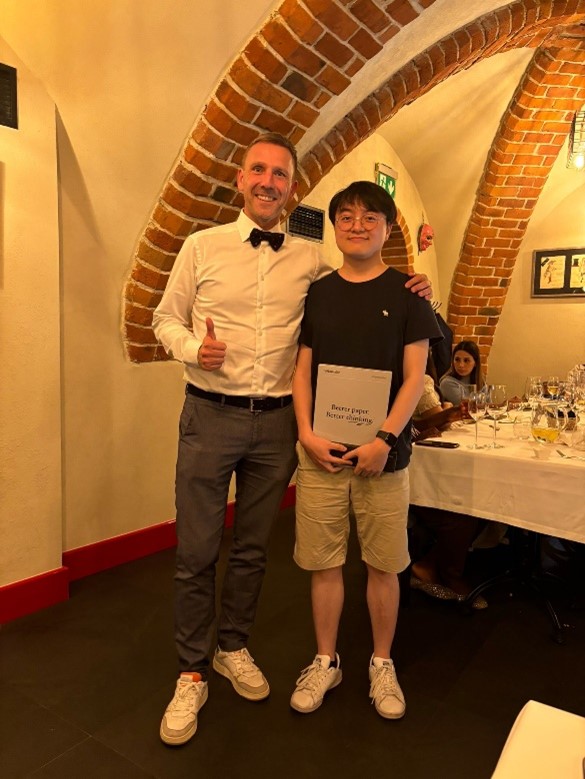
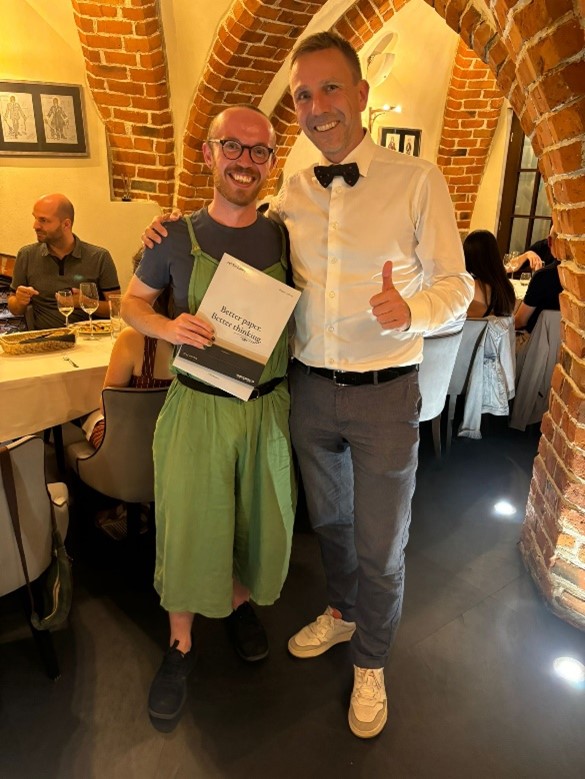
The Summer School Lecturers’ Choice Poster Award was given to Wenxuan Wu, who is a PhD student at the University of Queensland (Australia). Wenxuan presented his research on understanding smouldering risk in chromated copper arsenate (CCA) treated timber. His research included the definition of a locally important design issue, identifying potential causes, as well as proposing a sound explanation of the observed behaviour.
The Summer School Participants’ Choice Poster Award was given to Matthew Bonner, who is Fire engineer and Research lead at Trigon Fire Safety (UK). Matt’s poster showcased his top-down approach to façade fire safety, including four separate research projects that add knowledge on the façade fire safety problem. The second place went to the poster by Jakub Bielawski from ITB (Poland). The third place was a tie between the poster by Bogdan Racięga and Magdalena Siedzielnik from Baltic Fire Laboratory (Poland) and the poster by Ian Pope from DBI (Denmark).
|
|
|
|
Figure 5. The Summer School Lecturer’s Choice poster winner Wenxuan Wu (left) and Participants’ Choice Poster Award winner Matthew Bonner (right) were both congratulated by Grunde Jomaas.
|
Fire laboratory visits and practical demonstrations
The Summer School also offered the participants a unique opportunity to visit two fire laboratories in Poland. They were able to tour the facilities, witness live demonstrations and experiments, meet the teams behind the laboratory operations, and closely inspect data, testing processes, and specimens.
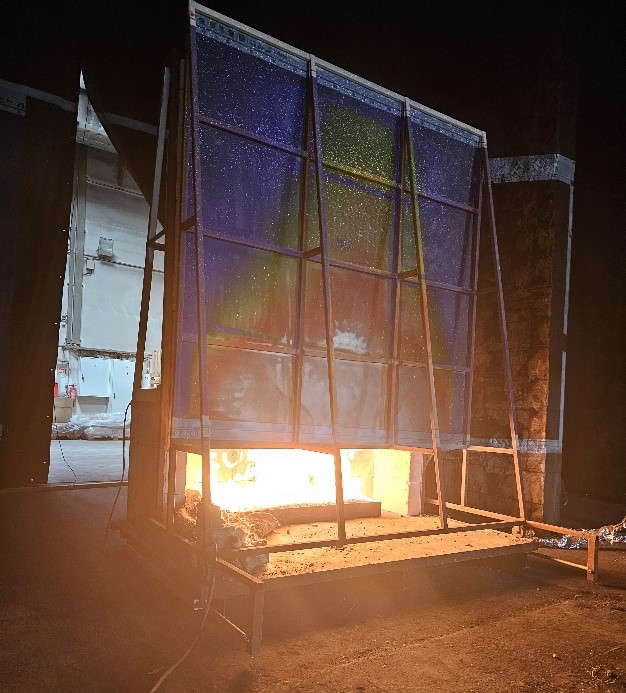
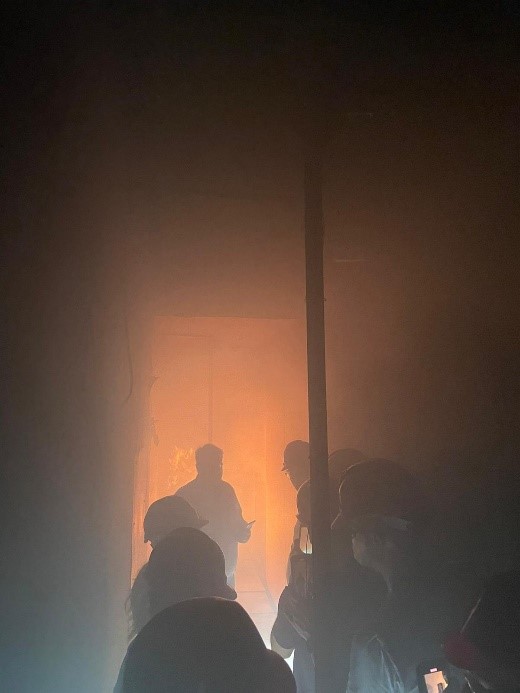
On Wednesday September 4th, a full day was dedicated to visiting the Instytut Techniki Budowlanej (ITB) Fire Testing Laboratory in Pionki, 105 km from Warsaw. The participants explored three different demonstrational tours where they learned about ITB's experiments and equipment for fire-related testing. The first tour presented the ITB Fire Testing Laboratory, one of largest fire testing facilities in Europe, handling 200+ fire resistance and 2000+ reaction to fire tests each year. The walkthrough was given by the laboratory experts with explanation on the fire testing technology, including explanation of the fire testing and operations of furnaces. The second tour showed the fires testing of a ventilated façade with an adjustable cavity width to observe the changes in fire behaviour in a cavity with different sizes, which also served as an introduction to temperature and flow measurements in fire experiments. This included the use of IR cameras and projectors to display real-time temperature data of materials exposed to fire. The third tour took participants to the aerodynamic wind tunnel facilities and smoke control in a corridor. The experiments were carried in full-scale smoke control laboratory (30 m corridor) equipped with all types of smoke control and active fire suppression system (sprinkler, as well as low- and high-pressure water mist) with direct processing of experimental results and ability to experience simulated evacuation conditions with realistic visibility and heat exposure.
|
|
|
Figure 6. Ventilated façade fire and smoke control in corridor demonstrations at ITB Fire Testing Laboratory.
The official Summer School activities concluded on Friday September 6th, but the participants had also been invited to extend their stay and visit the Baltic Fire Laboratory in Gdansk on Saturday September 7th. A group of about 40 participants and lecturers were guided through the day by Bogdan Racięga, head of the laboratory and a member of the Summer School community. The day started with a tour around the facilities of the laboratory, which is one of largest active fire protection system testing facilities in Europe, handling 600+ full-scale fire tests each year for various active fire protection systems including, sprinkler, water mist, Clean Agent, CO2, and Aerosol. The laboratory demonstrations included observing the operation of water-based automatic fire suppression systems (both sprinkler and water mist). The active fire protection systems were then discussed, as well as the fire testing procedures, and their role in fire safety engineering. Finally, the highlight of the laboratory excursion was a full-scale car park fire tests with burning of a real car to showcase the effectiveness of water-based automatic suppression systems (water mist) in preventing fire spread between vehicles in car parks, Ro-Ro vessels, and other structures dedicated to cars.
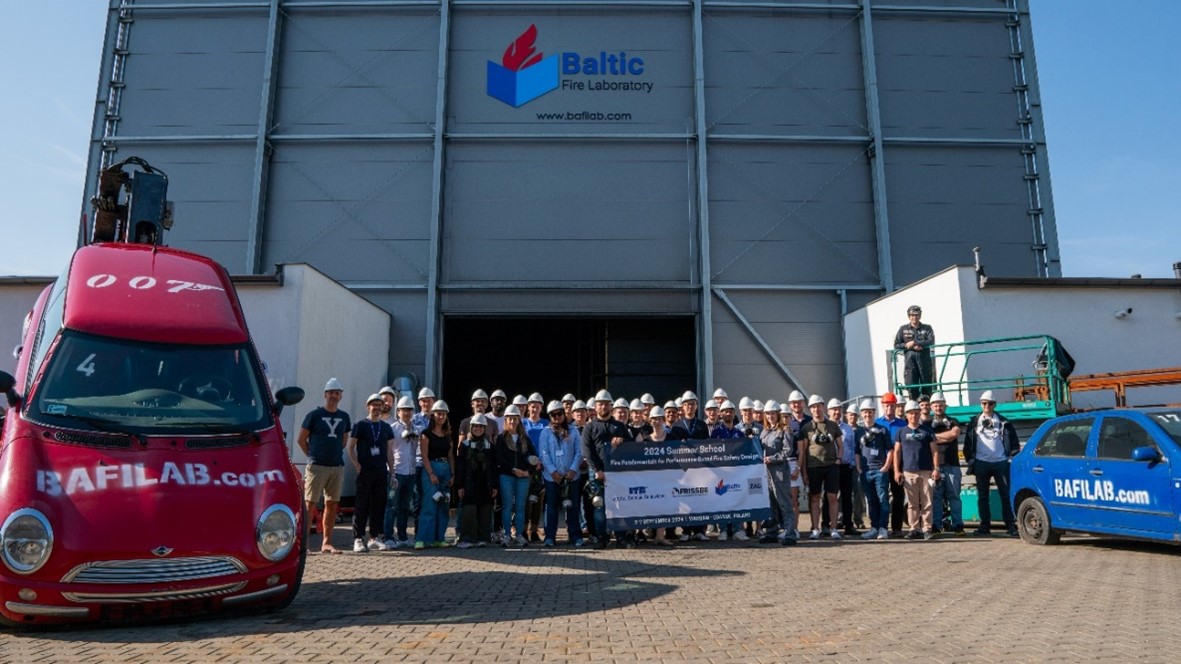
Figure 7. Summer School group picture at the Baltic Fire Laboratory in front of the 9600 m3 laboratory hall.
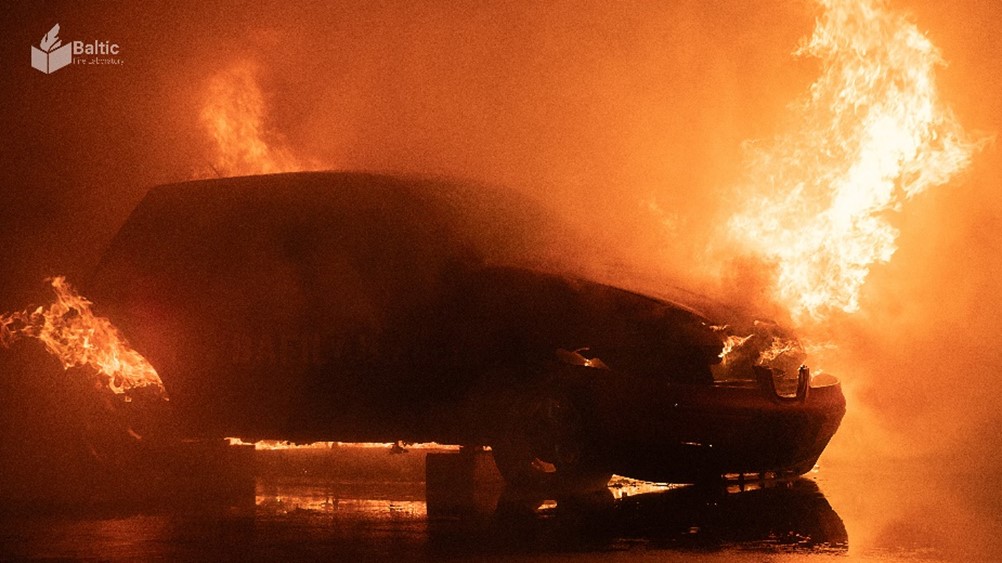
Figure 8. Car burning demonstration at Baltic Fire Laboratory with suppression system – water mist.
Acknowledgment to organisers, local hosts and sponsors
The success of the Summer School can be attributed to the organisation and coordination by the local hosts, the Instytut Techniki Budowlanej (ITB) and the Baltic Fire Laboratory (BFL), as well as the FRISSBE project, which has received funding from the European Union's Horizon 2020 research and innovation programme under Grant Agreement No. 952395. In addition, the Summer School received invaluable support from sponsors, who contributed with significant resources that allowed fee-waivers for many participants and enhanced the overall experience for everyone involved.
Participants feedback
The Summer School was received with high positivity and enthusiasm, as highlighted by the results obtained through the final feedback form and the cascade of LinkedIn posts.
Figure 9. Exit questionnaire feedback. Left) How would you rate your overall experience at the Summer School? Right) How likely are you to recommend this Summer School to a friend or colleague?