
View the PDF here
Reflective Practice in Fire Engineering
By: Leo Willem Menzemer a, b
a DBI – The Danish Institute for Fire and Security Technology, Denmark
b Division of Fire Safety Engineering, Lund University, Sweden
Introduction
The following article introduces the topic of reflective practice for a fire engineering audience. It first presents an overview of some prevalent theory for reflection before connecting how they relate to engineering practices. In the second half, the author shares an example of a recent encounter in a project, how it relates to an older experience, and how he reflects upon it. Lastly, a personal view towards his reflective experiences is shared by the author. This article does not aim to exhaustively cover and discuss epistemology of design and research practices, rather it is attempting to sketch and hint at few of the existing frameworks for reflecting on one’s practices. The idea of a piece on this topic for the SFPE Europe Magazine was conceived by Sandra Vaiciulyte and in subsequent joint discussion with the intentions to offer this topic a platform within the wider fire engineering community and commence an exchange on how members of the community reflect upon their work. As a starting point for further literature on the topic, the interested reader may take a look at the references that are provided at the end and the broader associated body of literature. This article means to explicitly invite its readers to engage with this topic, share their own reflections, and discuss them with peers.
Reflective Practice
“It is not sufficient simply to have an experience in order to learn. Without reflecting upon this experience it may quickly be forgotten or its learning potential lost. It is from the feelings and thoughts emerging from this reflection that generalisations or concepts can be generated.” (Gibbs, 1988)
Why should we take time to revisit situations in professional experience? Engaging in such reflective exercises of self-observation and self-evaluation supports understanding our experiences and promotes learning off them, professionally and personally. Reflective practice means to (sometimes) look back and actively think about work experiences, our actions, and decisions. Consciously revisiting moments and memories to analyse them can help to understand what went well in a situation, a task, or a project and what did not, thereby aiding to learn from situations and to improve in the future. (McCarthy, 2011)
There are many reflection techniques, and guides that describe them, that have been established in literature. Schön’s Reflection-in-Action and Reflection-on-Action describes the difference between reflecting on a future course of action during a current task or situation, or in retrospect afterwards (Schön, 1983). The former relates to how our current perception and understanding of a task may change while engaging in it, for example, how designers gain new ways of looking at a task at hand by practically engaging in it (Currano, 2015; Schön, 1983). Reflection-on-Action means to take an active break to look back on an experience, processes that are for example described in Kolb’s Experiential Learning Cycle (Kolb, 1984), Gibbs’ Reflective Cycle (see Figure 1; (Gibbs, 1988)), or the What-model (“What? So what? Now what?”) (Driscoll, 1994; Rolfe et al., 2001).
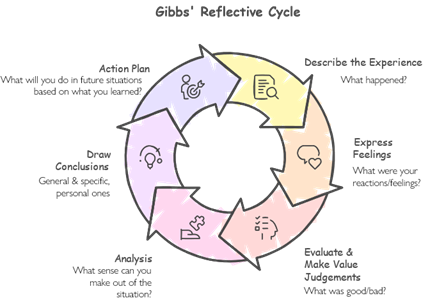
Figure 1. Gibbs' reflective cycle. (Gibbs, 1988)
These reflection models have in common that they guide the assessment of past experience (e.g. a situation, a project, or a task) to inform future practice. Reflective practice helps individuals identify strengths and weaknesses. Engineers, for example, can identify areas for growth, refine problem-solving and decision-making techniques, and enhance future design quality by critically assessing their successes and challenges in past projects. As such, reflective practice in engineering can ultimately support innovation and adapting to complex project demands. Fire engineering per se is a multidisciplinary field that connects to a wide range of science and engineering disciplines. As such, also forms in which professionals approach problems and realise reflection and reflective practices may vary. As a consequence of its multidisciplinary nature, it is important that fire engineering education encourages engineers to actively engage in critical reflections enabling continued life-long learning and development beyond formal education and training (Bray et al., 2024). It should be noted that such processes are not contained to silent exercises conducted mentally or with pen and paper following exact frameworks. Case-studies show that people engage in reflective tasks just as well during what could easily be perceived as unproductive times, for instance before going to sleep or in conversations (e.g. with peers or friends) (Currano, 2015). In fact, engaging in reflective conversation has the benefit of raising an issue for discussion, which helps mitigating potential self-confirmation bias, as we may, for example, receive feedback of which one was previously unaware (Brockbank and McGill, 2007).
Reflecting upon a recent encounter on responsibility in fire engineering
The following text is a report that describes how a recent project led me to revisit some thoughts on responsibility as a practicing fire engineer.
In a research study, we explored how members of the general public would perceive fire risks in taller timber buildings, and such built from biobased materials (Menzemer et al., 2025). The analysis of the collected data showed that participants attributed these buildings higher levels of risk than non-combustible equivalents. However, from interviews we came to understand that such sense of risks would not translate into feeling unsafe towards the usage of (taller) timber buildings. The reason for that was associated to people’s trust towards designers (e.g. engineers & architects) being competent to provide adequate and safe design solutions, an expectation that perceived risks would be mitigated, and that authorities would further safeguard surrounding approval processes.
The experience of the accounts from our interview participants and the results that the analysis yielded led me to think about responsibility as a fire engineer towards society and to revisit a practical example from a point when I had very little practical working experience as a fire engineering consultant: In essence, I saw myself faced with a series of inquiries by a lead architect on how they could add cladding across the façade of a larger multi-storey residential building block using a specific product for cosmetic purposes during later stages of construction in a project that I had recently been assigned to take over. As the requested product did not the meet requirements in its reaction to fire for the given type of (residential) building, and would likely promote rapid external flame spread, there was not much room to accommodate the initial request. In subsequent discussion there was no sufficient willingness to compromise on alternative solutions (e.g. partial cladding, fire barriers, alternative products or materials, …) leading to continued refusal of the inquired modifications until my involvement in the project came to stop by the end of my engagement with the company at the time.
This situation serves as an example for me, as I wondered at the time if I should have adopted a more flexible stance to find a solution for the client’s requests and if my limited practical experience in engineering may have led me to feeling insecure or being overly cautious at the cost of overlooking a potential solution to the task. Having spent more time in engineering since then, I am confident that depending on the commissioned resources in communication with the client, a viable solution to this task that could satisfy fire safety goals could have eventually been developed. At the same time, I do not think that the judgement at the time came from a place of insecurity or lacking confidence, but instead from a cautious evaluation to the situation and as such I stand by the approach despite how few instances of practical design experience I had had at the time. The accounts from interviewees that were originally introduced at the beginning of this story speak of the trust that the public puts into building designers, including fire engineers, and authorities to safeguard the built environment giving them a leap of faith. Consequently, it is safety that should be the priority, and in my conclusion, it is thus warranted, if not a requisite, to act cautiously when approaching the limits of our knowledge and experience. As such, an attempt of being self-aware towards one’s knowledge and experience and possibly more importantly one’s boundaries to it is important and can be helped by deliberate reflection. This may help identify novel approaches that can be tested and applied under scrutiny in later developments.
I would like to emphasise on a personal note, that I deem individual thinking over a walk, coffee, sleepless night or another random or specifically devoted time as very helpful in ideation and critical reflection for myself. However, I have experienced the importance of mentorship, especially during early stages of entering areas and tasks that are novel to me. I also experience that formulating a topic for a discussion with someone else helps me regularly find entirely new perspectives on it. Either by taking a look from a different angle while I need to articulate the issue adequately to someone else (which sometimes helps me disentangle thoughts that are formulated in a more chaotic structure in my mind), or because I receive feedback from a perspective or with facts that are new to me that unlock new paths to look or approach the topic at hand. I feel very lucky to have (and have had in the past) a great community of mentors, colleagues, family, and friends supporting me that I can turn to for such longer discussions or just little chats.
Conclusion: Engaging in reflection
The intention of this text is to give reflective practices a little spotlight and a platform by sharing a brief practical instance of one. The article discusses how reflection is important for personal and professional development and can help improving engineering practice through innovation as a result. It serves the purpose to attempt inspiring more stories to be shared with the SFPE and general fire engineering community in the future. We would like to actively invite the readers of this article to share their own experiences and opinions with their peers in all forms, and possibly in more stories in future issues of the SFPE Europe Magazine.
Acknowledgements
Sandra Vaiciulyte initiated the idea for having an article on reflective practice in the SFPE Europe Magazine. The joint discussions following it have been a source of inspiration and a valuable opportunity for me to set aside some time for distinct reflection in the past weeks and I am grateful for the experience. I would also like to acknowledge Robert Bray for reading through the initial draft of this text providing constructive criticism and language editing.
References
[1] Bray, R.J., Fernandez-Anez, N., Maluk, C., Merci, B., Wang, Y., Woodrow, M., 2024. IAFSS workshop on education 2023 – Perspectives on the need for competence in fire safety engineering. Fire Safety Journal 144, 104105. https://doi.org/10.1016/j.firesaf.2024.104105
[2] Brockbank, A., McGill, I., 2007. Facilitating reflective learning in higher education, 2. ed. ed. Open University Press McGraw-Hill, Maidenhead.
[3] Currano, R.M., 2015. Reflective Practice in Engineering Design. Stanford University.
Driscoll, J., 1994. Reflective practice for practise. Sr Nurse 14, 47–50.
[4] Gibbs, G., 1988. Learning by doing: a guide to teaching and learning methods. FEU, London.
[5] Kolb, D.A., 1984. Experiential learning: experience as the source of learning and development. Prentice-Hall, New Jersey.
[6] McCarthy, J., 2011. Reflective Writing, Higher Education and Professional Practice. Journal for Education in the Built Environment 6, 29–43. https://doi.org/10.11120/jebe.2011.06010029
[8] Menzemer, L.W., Vad Karsten, M.M., Gwynne, S., Dragsted, A., Ronchi, E., 2025. Public perception of fire safety and risk of timber buildings. Wood Material Science & Engineering 1–14. https://doi.org/10.1080/17480272.2025.2459350
[9] Rolfe, G., Freshwater, D., Jasper, M., 2001. Critical reflection for nursing and the helping professions: A user’s guide.
[10] Schön, D.A., 1983. The reflective practitioner: how professionals think in action. Basic Books, New York.