
View the PDF here
SFPE UK Chapter Awards 2025 – Celebrating Excellence and Innovation in Fire Engineering
By: SFPE UK Chapter
Every year, the SFPE UK Chapter Awards shine a light on the individuals and projects pushing the boundaries of fire engineering practice, research, and professional development. Designed to honour excellence across three categories: Fire Engineering Strategy, Fire Research Project, and ‘Up & Coming’ Fire Engineer. The awards showcase not only technical innovation, but also commitment to community, thought leadership, and the advancement of fire safety knowledge.
The awards underscore a key purpose of the SFPE UK Chapter: to recognise and elevate those who contribute meaningful progress to the fire engineering discipline. Whether through pioneering research, transformative design strategies, or the exceptional promise demonstrated by early-career professionals, the winners embody the values at the heart of the Chapter’s mission. In accordance with the official award criteria, the submissions must demonstrate rigour, clarity of purpose, innovative thinking, and tangible benefit to the wider fire engineering community.
The 2025 award cycle saw a record number of submissions from across the UK fire engineering community, reflecting the diversity of challenges facing practitioners today, from emerging materials and technologies to the evolving regulatory landscape shaped by lessons from recent fire incidents. This year’s winners represent both depth of expertise and breadth of vision, illustrating how fire engineering continues to evolve through evidence-based practice and collaborative innovation.
We are proud to announce and celebrate the 2025 recipients below.
SFPE UK Chapter Award 2025 – Best Fire Research Project
Winner: Dr Konstantinos Chotzoglou, OFR Consultants, London, UK
Co-author: Michael Spearpoint
Title: Performance Assessment of Fire Spread Between Balconies Using Full-Scale Tests: Bridging the Gap Between Assumptions and Measurements
Recent balcony fires in the UK, including the well-documented incidents at Hallam Court in Croydon (2023) and De Pass Gardens in Barking (2019), have demonstrated the speed with which flames can spread vertically and laterally between balcony levels. Yet, despite their classification as attachments to the external wall system under Approved Document B, balconies have historically received far less research attention than façades. As highlighted in Dr Chotzoglou’s submission, design assumptions have long filled the void left by limited empirical data, a gap the project set out to close through a landmark full-scale testing programme.
The research involved eight full-scale balcony fire experiments, conducted under a 10 MW oxygen-consumption calorimeter, an unprecedented scale for UK balcony fire studies. Each test varied the combination of decking types, balustrade materials (including laminated glass and HPL), and moveable fuel loads to investigate real-world fire behaviour. The bespoke three-storey test rig enabled precise measurement of heat release rate (HRR), heat flux, and fire spread mechanisms across balcony levels.
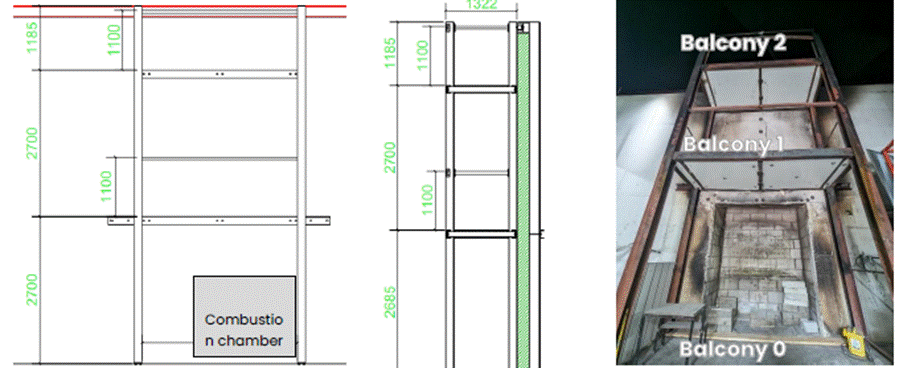
Figure 1. Full-scale balcony test rig constructed under the 10MW calorimeter at Efectis UK/Ireland.
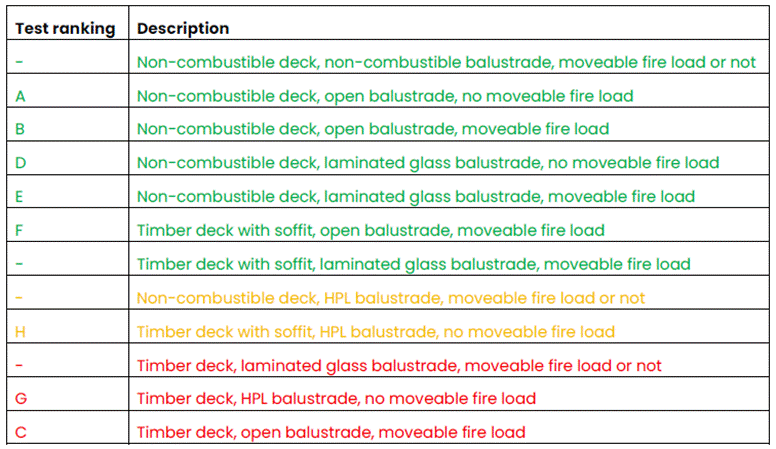
The results were unequivocal: exposed timber decking was the most significant driver of rapid fire growth. Flames reached the balcony two storeys above in 7–9 minutes, with HRR values exceeding 13 MW, in stark contrast to non-combustible decking systems, which exhibited no vertical spread. Laminated glass balustrades provided modest delay but minimal energy contribution, whereas HPL panels markedly intensified fire growth, especially in combination with combustible decking. The incorporation of non-combustible soffits beneath timber decks delayed vertical spread by over 20 minutes and reduced façade heat flux by at least 50%, although they did not fully prevent fire propagation.
The study also introduced significant methodological innovations. Most notably, a qualitative acceptability ranking was developed, providing engineers with a clear hierarchy of fire performance across balcony configurations. In addition, the application of the Fire Growth Rate Index (FIGRA) as a semi-quantitative ranking tool for balcony assemblies for assessing performance in the absence of established test standards.
Table 1. Qualitative ranking of fire spread performance of tests - best to worst. Colours indicate likely acceptability (green - acceptable; orange - marginal; red - unacceptable).
The research has already influenced regulatory and industry discussions, including Building Safety Regulator work relating to Regulation B4(1), and is expected to inform future revisions of BS 8579 and PAS 9980. By replacing assumption with evidence, this work establishes a crucial foundation for safer balcony design and a new benchmark for experimental research in external fire spread.
SFPE UK Chapter Award 2025 – ‘Up & Coming’ Fire Engineer
Winner: Lorna Johnson, Arup, Edinburgh, UK
Since joining the fire engineering profession in 2022, Lorna Johnson has demonstrated exceptional capability, leadership, and passion, qualities that define the purpose of the “Up & Coming” Fire Engineer Award. Meeting the eligibility criteria as a fire engineering professional with under three years’ experience, her submission illustrates not only technical achievement but also strong commitment to knowledge sharing and industry improvement.
Lorna graduated with a First-Class Master’s degree in Structural Engineering with Architecture from the University of Edinburgh, where her thesis focused on the fire performance of protective coatings for mass timber. Her experimental research, later presented at the World Conference on Timber Engineering, brought new attention to the limitations of coating systems used in mass timber construction and emphasised the need for deeper understanding as timber becomes more widely adopted.
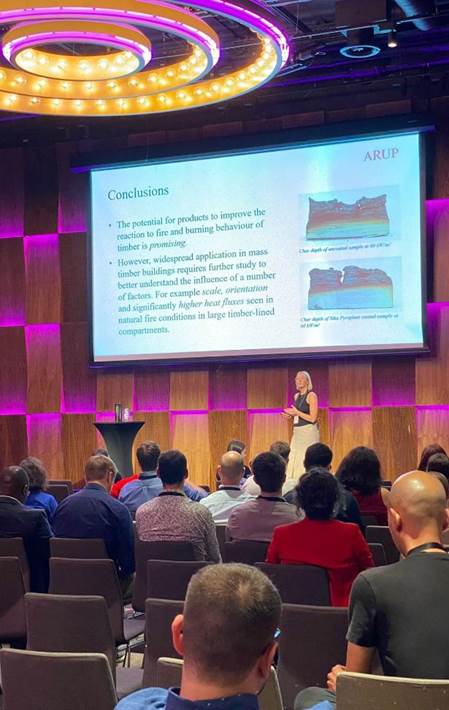
Figure 2. Presenting at the World Conference on Timber Engineering.
In practice, Lorna has contributed to a variety of challenging and high-profile projects. These include one of Scotland’s first large-scale mass-timber developments, where she helped develop a performance-based approach to balance architectural aspirations with fire safety constraints. She played a key role in the fire strategy for the Listed King’s Theatre in Edinburgh, undertaking heritage-sensitive risk assessments and supporting on-site evaluations. Her technical involvement in developing Arup’s first Building Safety Case submissions under the Building Safety Act 2022 further demonstrates her ability to navigate complex regulatory environments and collaborate across disciplines.
Lorna’s drive to advance industry knowledge is evident in her presentations at SFPE conferences, her published work on Building Safety Case lessons learned, and her involvement in Arup’s internal advisory group monitoring legislative changes. She has also presented research on EV-related fire risks and submitted further work to upcoming conferences.
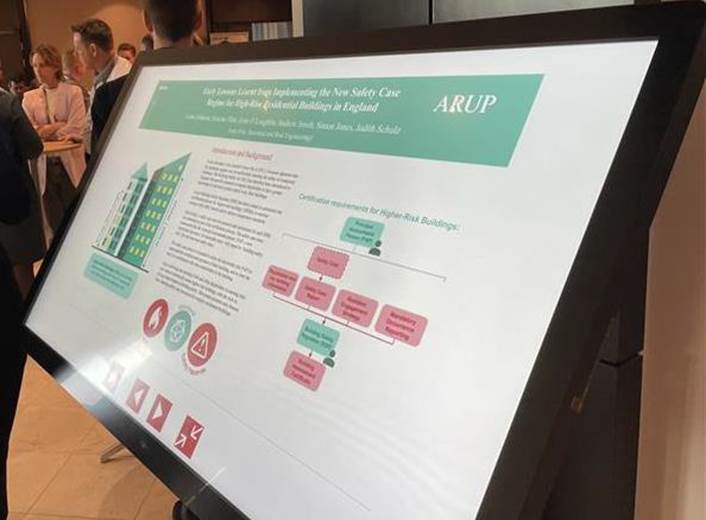
Figure 3. ‘My Building Safety Case’ poster presented at the SFPE Performance Based Design Conference.
Her commitment extends beyond technical work. Lorna actively supports the SFPE Student Chapter in Edinburgh, organising workshops, encouraging early-career engagement, and promoting diversity and inclusion within engineering. Within her team, she is recognised as a source of positivity and cohesion, helping build a collaborative and supportive environment.
Lorna’s early career is characterised by curiosity, professionalism, and a genuine desire to contribute to safer and more resilient built environments. Her achievements and attitude reflect both remarkable potential and immediate impact, making her a deserving recipient of the 2025 Up & Coming Fire Engineer Award.
SFPE UK Chapter Award 2025 – Fire Engineering Strategy
Winner: Cameron Milne, Arup, London, UK
Co-authors: Emily Pearson, Judith Schulz, Yavor Panev, Momoi Suda
Project: 50 Fenchurch Street
The winning Fire Engineering Strategy for 2025 recognises the exemplary work undertaken for 50 Fenchurch Street, a 36-storey, all-electric, net-zero-in-operation development set to become one of London’s lowest-carbon tall buildings. Designed by Arup for AXA IM Alts and YardNine, the project challenges established high-rise norms and integrates sustainability holistically, including an ambitious external greening scheme extending over 100 metres up two façades and around the top of the tower. This feature alone required a highly innovative fire engineering approach, given its absence from conventional regulatory frameworks.
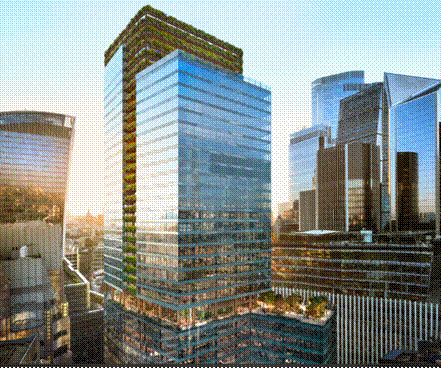
Figure 4. 50 Fenchurch Street external greening L10 public podium and terrace (@AXA IM Alts).
Sustainability driven design
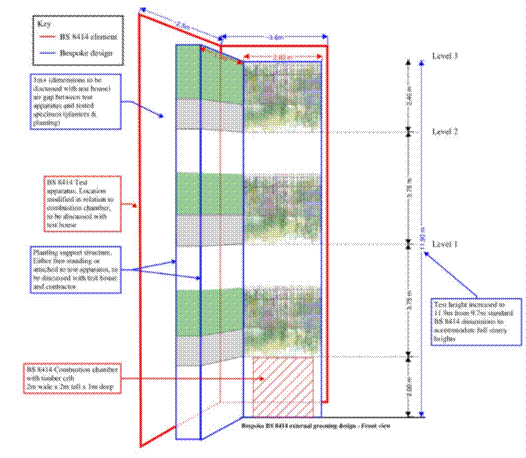
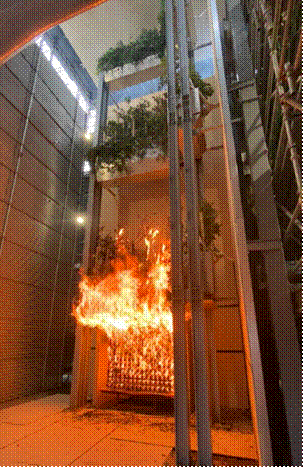
A key aspect of the strategy was navigating fire safety for the building’s extensive external greening, which evolved dramatically during design. Early concepts focused on drought-resistant evergreen species and spatial separation between occupants and planting. However, later design changes introduced amenity balconies and a wider mix of deciduous plants to enhance biodiversity. These shifts required reassessment of ignition risk, moisture content management, and resilience of plant species, under greatly varying microclimates; wind modelling predicted exposure conditions akin to the Cornish coast at upper levels! To demonstrate compliance, the team developed a bespoke large-scale fire test, modifying BS 8414 geometry to represent a credible worst-case balcony-to-greening fire exposure. Conducted at the Fire Protection Association in 2024, the test confirmed that even severe balcony fires would not cause sustained upward fire spread. It also generated valuable empirical evidence on burning brands and flaming droplets for post-test hazard quantification.
|
|
|
Figure 5. Sketch of the bespoke modified BS 8414 test with large scale fire test.
Equitable means of escape
Beyond greening, the fire strategy addressed next-generation office design through evacuation modelling equitable means of escape, including lift-enabled evacuation. Collaboration with inclusive design specialists and vertical transportation engineers ensured that future diverse user profiles could be safely served, especially in high-occupancy podium levels.
Fire safe structure
Structural fire engineering was another major component. The project’s prefabricated “megaplank” system presented limited reinforcement continuity and uncertainties under open-floorplate fire conditions. Through ductile connection detailing, strengthening, LS-DYNA thermomechanical modelling, and a Monte Carlo time-equivalence study, the team optimised fire protection thicknesses while achieving significant reductions in embodied carbon – around 300 tonnes, equivalent to ~300 London–New York flights. Structural robustness analysis investigating multi-storey fire scenarios using advanced FEA was undertaken to maximise flexibility for future tenants.
Addressing novel hazards and other risks
Careful consideration was given to address fire hazards presented by large-scale e-bike charging facilities. Proof-of-concept CFD modelling for all firefighting shafts addressed concerns raised by City of London Building Control.
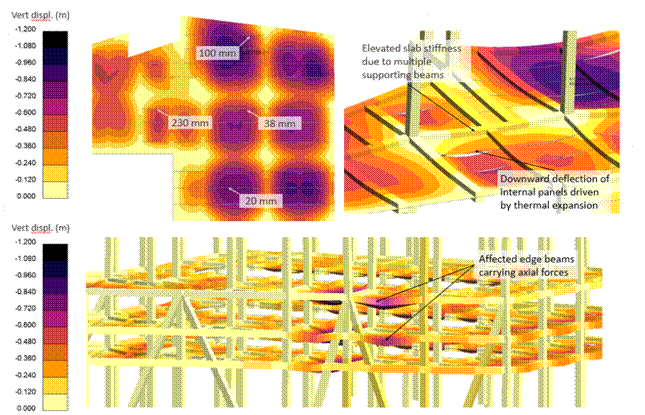
Figure 6. Example challenges of localised differential deflections (top) and reduced lateral restraint (bottom).
Pioneering the future
By maintaining an evidence-led, collaborative, and forward-thinking approach throughout a shifting regulatory environment, the team delivered a robust and future-ready fire strategy that supports both ambitious sustainability goals and exemplary life-safety performance.