
View the PDF here
A Risk-Informed Approach to Regulatory Changes for Fire Requirements
By: Brian Meacham, Lund University, Sweden
Kyle Christiansen, SenezCo Fire Science & Engineering, USA
Nicholas Ozog and Carl Baldassarra, Wiss, Janney, Elstner Associates, USA
Greg Metz, Minnesota Department of Labor and Industry, USA
Building regulatory changes for fire safety can be difficult. Fire safety provisions of building regulations in many countries are steeped in history, with many of the most recent changes reacting to the last fire that yielded unwanted consequences. Some criticize function- or performance-based building regulations for not having enough guidance or ‘guardrails’ to control for emerging fire hazards and risk, leaving too many decisions to designers and engineers. Likewise, some prescriptive building regulations (or compliance documents) layer on new provisions, with little or no assessment of the interaction with historical provisions. There are further critiques that prescriptive building regulations do not address emerging hazards in a timely manner. At the same time, building regulations try to address changing societal and policy objectives and provide flexibility for innovation, all while delivering buildings that meet a level of societally tolerable risk. In some cases, risk in general, and fire risk specifically, are not expressly considered in any of the regulatory change evaluations.
Risk-informed decision-making (RIDM) can provide the basis for assessing regulatory change for fire that uses available hazard and risk data, along with a breadth of stakeholder perspectives, to understand, benchmark and evaluate options, and to facilitate discussion, agreement and change. It can be used to consider the impact of policy changes that are deemed important for society, innovation that comes from the market, and concerns from the public and other stakeholders.
As the name implies, RIDM is an approach that uses risk data to inform decisions, and which features stakeholder deliberations to help assure common understanding. Numerous definitions for RIDM exist, with variation depending on the use context. The U.S. Federal Energy Regulatory Commission (FERC), for example, defines RIDM as “the process of making safety decisions by evaluating if existing risks are tolerable and present risk measures are adequate, and if not, whether alternative risk reduction measures are justified” [1]. RIDM has broad application within the structural engineering community [e.g., 2-5], and while slow to catch on, this has also been suggested for fire safety engineering [e.g., 6] and building regulation [e.g., 7-9]. A critical attribute of RIDM is that the focus is not specifically on how one quantifies risk, but how one uses risk information in a decision. This makes RIDM different than risk-based design, which is often based on achieving a specific risk or reliability value.
In North America, there is currently significant discussion and debate regarding potential regulatory changes to allow for a single exit stair for residential buildings in the range of 4-6 stories above grade with limited floor plate areas [e.g., 10-12]. Several proponents cite the need for more mid-level housing, and have raised questions concerning the need for two exit stairs, which could place limits on siting such buildings. For those outside of North America, this concern may seem disproportionate for rather small buildings, since single-stair residential buildings are permitted to much higher levels in Europe and elsewhere around the world [e.g., see 10, Appendix A.2.] However, North America has a long history of requiring at least two means of egress in buildings, dating to historical fires such as the Triangle Waistcoat Fire in 1911 and development of the NFPA 101, The Life Safety Code, which originated in the NFPA Committee on Safety to Life which was formed in 1931 [13].
In 2025, the U.S. State of Minnesota (MN) Department of Labor and Industry (DLI) authorized a RIDM approach to compare the risk in single stair multi-family dwelling (MFD) configurations to code-compliant single-exit stair and two-exit stair MFDs [14]. In this study, the RIDM approach that was applied consisted of the steps as outlined in Fig 1:
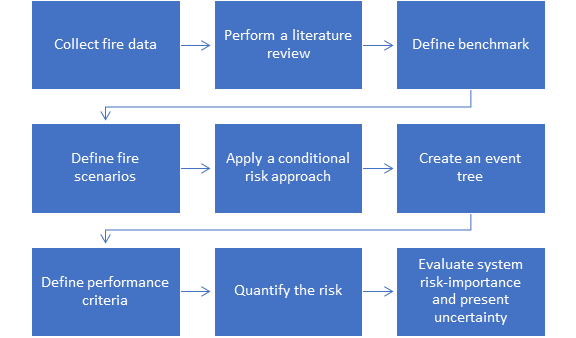
Fig 1. RIDM approach to single-exit stair MFD risk comparison [authors]
Fire loss data and system performance data were collected from U.S. national and MN data sources. This included data on civilian and firefighter injuries and fatalities and fire protection system reliability in MFD fires, as well as baseline data regarding fire sources, fire locations, and location of fatalities in MFD fires. The literature search was used to obtain data and information on performance of systems for which U.S. national and Minnesota datasets did not include, such as fire door reliability. The literature search was also used to acquire additional information regarding fire sources and locations, typical fuels and size of fire that could be reasonably expected in MFD in sprinklered and non-sprinklered scenarios, MFD unit size information, tenability criteria, and occupant characteristics.
Input was also collected from a wide range of stakeholders via surveys, interviews, and the Technical Advisory Group (TAG) set up by the MN DLI. Furthermore, a series of decisions on factors to consider, including how to benchmark risk for this analysis, building configurations to consider, occupant loads, fire safety systems and features of MFD buildings, were made in conjunction with the MN DLI. In particular, use of this type of analytic-deliberative risk characterization process [15,16] helped to assure a variety of inputs were heard and considered, appropriate boundary conditions could be set, and limitations on data and subsequent analysis could be fully vetted.
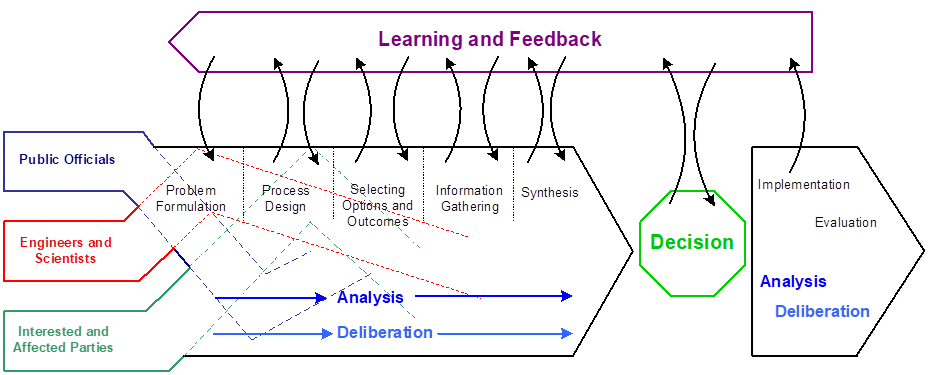
Fig 2. Exemplar analytic-deliberative risk characterization process [15,16]
Outcomes of discussions with the TAG included agreement on taking a comparative risk approach, in which the risk associated with a benchmark building would be used to compare different prototype options. It also included agreement on using a conditional risk approach, which assumes probability of fire ignition of 1.0. This helped to mitigate the lack of publicly available ignition probability data and significant uncertainty that would be associated with ignition probability estimates. Building configurations for benchmark and comparison were also agreed to. Initial mitigating systems were identified as those required by MN building regulation. The TAG also agreed with the event tree approach, as well as defining the consequence as the number of occupants likely to remain in the MFD after tenability limits in the egress pathway had been reached. Finally, it was agreed that although fire service response can play an important role in rescue operations, data describing the fire response are lacking, and thus like ignition probability, this factor was not considered.
Next steps involved creating the event tree using the code-required mitigating systems to estimate the probability of different end states occurring based on mitigating system success or failure. The event tree can be modified as needed to quantify the risk benefit of incorporating optional mitigating systems. Fire modeling was used to estimate tenability conditions when the unit or origin door to the corridor was open. Risk to occupants in the unit of origin was not considered, as the code assumed that protection could not be guaranteed. Response time of occupants to cues and bases of movement time were taken from the literature. With consequence being a function of the number of occupants remaining in the building when tenability limits in the exit pathway are reached, the alerting of occupants plays a key role. The event tree is shown in Fig. 3.
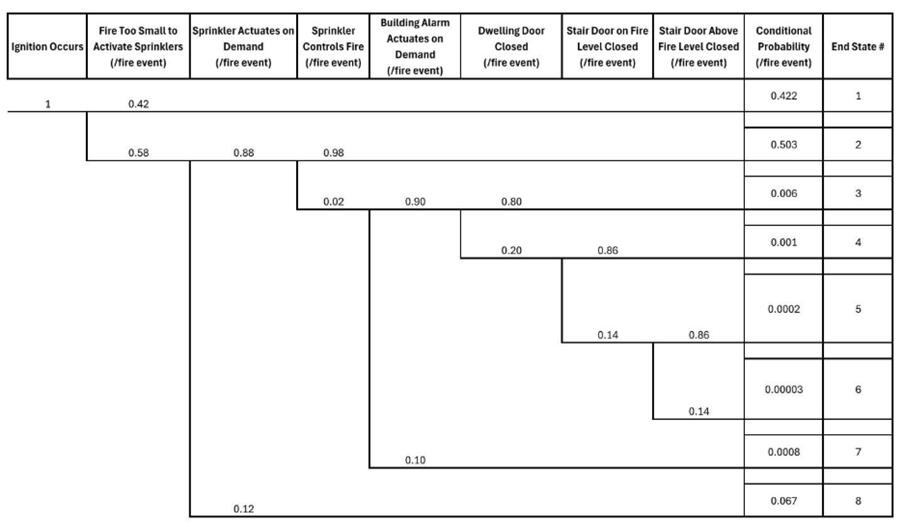
Fig 3. Event tree for comparative risk assessment [14]
The risk from fires originating in the dwelling unit’s living room and the building corridor are calculated using the event tree probability and consequences for each end state. The most risk-significant mitigating system is the automatic sprinkler system which provides three key functions: applies water to the fire, activates the building-wide fire alarm system to cue occupant evacuation, and to dispatch the fire department. The results also show that the risk of the prototype single-exit stair MFD can be reduced to comparable risk levels of code compliant single-stair MFD by introducing a common area smoke detection system interlocked with the MFD’s building-wide fire alarm notification system (not currently required by the MN code). The analysis indicates that a second exit stair is not significant in lowering risk further for the configurations considered. An in-depth discussion of the approach, data and analysis is available for those who are interested [14].
In the end, the RIDM approach was shown to be highly effective in bringing together a wide range of data and stakeholder perspectives, facilitating agreement on how to characterize risk, consequence, and use of probability concepts, and achieving a robust analysis that met the need of the MN DLI and policy makers. Aside from the successful application in MN, the findings illustrate how a well-structured and managed RIDM approach can be used to help inform revisions to building and fire codes and provide actionable strategies for policymakers evaluating fire safety issues.
Acknowledgements
The authors thank the State of Minnesota, the Minnesota Department of Labor and Industry, TAG members, and stakeholder groups for the data they collected and shared, the time they spent being interviewed, and their overall contributions to improve the quality of this analysis. The authors also thank the National Fire Protection Association (NFPA) for providing the custom fire event data for multi-family dwellings. The Minnesota Department of Labor and Industry funded the initiative to complete this analysis and the authors thank them for investing in this effort.
References
[1] FERC Risk-Informed Decision Making Guidelines, Version 4.1, Federal Energy Regulatory Commission, Washington, DC, March 2016, https://www.ferc.gov/sites/default/files/2020-04/Introduction-to-Risk-Informed-Decision-Making.pdf
[2] Joern Birkmann, Holger Sauter, Ali Jamshed, Linda Sorg, Mark Fleischhauer, Simone Sandholz, Mia Wannewitz, Stefan Greiving, Bjoern Bueter, Melanie Schneider, Matthias Garschagen; Strengthening risk-informed decision-making: scenarios for human vulnerability and exposure to extreme events. Disaster Prevention and Management: An International Journal 27 November 2020; 29 (5): 663–679. https://doi-org.ludwig.lub.lu.se/10.1108/DPM-05-2020-0147
[3] Ersdal, G. (2024). Risk-Informed Decision-Making for Assessment of Existing Structures. In: Pavlou, D., et al. Analytical and Experimental Methods in Mechanical and Civil Engineering. OES 2023. Structural Integrity, vol 28. Springer, Cham. https://doi-org.ludwig.lub.lu.se/10.1007/978-3-031-49723-0_11
[4] Jianxu Su, Junping Zhang, Colin C. Caprani, Junyong Zhou, A practical framework for determining target reliability indices for the assessment of existing structures based on risk-informed decision-making, Structural Safety, Volume 114, 2025, 102583, ISSN 0167-4730, https://doi.org/10.1016/j.strusafe.2025.102583.
[5] Ellingwood, B.R. (2022). Risk-Informed Approaches for Mitigating Impacts of Extreme and Abnormal Events in the Built Environment. In: Stewart, M.G., Rosowsky, D.V. (eds) Engineering for Extremes. Springer Tracts in Civil Engineering . Springer, Cham. https://doi-org.ludwig.lub.lu.se/10.1007/978-3-030-85018-0_3
[6] Alvarez, A., Meacham, B.J., Dembsey, N.A. and Thomas, J.R., “A Framework For Risk-Informed Performance-Based Fire Protection Design For The Built Environment,” Fire Technology, DOI 10.1007/s10694-013-0366-1, Vol. 50, pp161-181, 2014.
[7] Meacham, B.J. “A Risk-Informed Performance-Based Approach to Building Regulation,” Journal of Risk Research, Vol.13, Issue 7, 2010
[8] Meacham, B.J., Stromgren, M. and van Hees, P. “A Holistic Framework for Development and Assessment of Risk-Informed Performance-Based Building Regulation,” Fire and Materials, DOI:10.1002/fam.2930, 2020.
[9] Meacham, B.J., van Straalen, IJ.J. and Ashe, B. “Roadmap for incorporating risk as a basis of performance objectives in building regulation,” Safety Science, 141 (2021) 105337, https://doi.org/10.1016/j.ssci.2021.105337, 2021.
[10] Pew Foundation, Small Single-Stairway Apartment Buildings Have Strong Safety Record, https://www.pew.org/en/research-and-analysis/reports/2025/02/small-single-stairway-apartment-buildings-have-strong-safety-record
[11] Len Garis, Evaluating Stakeholder Concerns About Proposed Single Egress Stairs - Residential Buildings in Canada, and What the Data Tells Us, University of the Fraser Valley, https://cdn.ymaws.com/cafc.ca/resource/resmgr/single_egress_resources/Single_Stair_Egress_Report-v.pdf
[12] NFPA, One Stair, Two Perspectives: Single Exit Stair Symposium, NFPA, Quincy, MA, https://www.nfpa.org/en/education-and-research/building-and-life-safety/the-single-exit-stair-debate
[13] NFPA 101, The Life Safety Code, National Fire Protection Association, Quincy, MA, USA.
[14] WJE & Crux (2025). Minnesota Single-Exit Stairway Apartment Building Study. https://dli.mn.gov/sites/default/files/pdf/Minnesota_Single-Exit_Stairway_Apartment_report.pdf
[15] Stern, P.C. and Fineburg, H.V., eds., Understanding Risk: Informing Decisions in a Democratic Society, National Academy Press, Washington, DC, 1996.
[16] Meacham, B.J., “Understanding Risk: Quantification, Perception and Characterization,” Journal of Fire Protection Engineering, Vol. 14, No. 3, pp.199-228, 2004