
View the PDF here
Fostering the effective fire response and the risk reduction at the community level ―A Case Study of Zihuatanejo, Mexico―
By: Genta Nakano, Disaster Prevention Research Institute, Kyoto University, Japan
1. Introduction
This study ethnographically documents the process through which a community-based disaster risk reduction organization, the Community Emergency Response Team (hereafter “CERT”), in Zihuatanejo de Azueta, Guerrero State, Mexico (hereafter “Zihuatanejo”), came to play a central role in initial fire response and evacuation support during a large-scale fire that occurred in December 2018. The study also suggests the potentials of the promotion for the fire prevention at the communities of the non-engineered housings.
Cases in which local residents voluntarily assume responsibilities for disaster risk reduction and response have been increasingly implemented in many countries. Examples include community-based disaster risk reduction organizations “Jishubosai Soshiki” in Japan (for example, Shiroshita et al, 2024), Community Emergency Response Teams in the United States (for example, FEMA, 2025) and volunteer brigades in New Zealand (for example, Fire and Emergency New Zealand, 2026). In general, these community-based groups collaborate with public disaster risk management and emergency response agencies to promote disaster preparedness at the local level and to support response during actual disaster events.
Research examining the outcomes of such community-based group has included questionnaire-based surveys targeting these organizations (for example, Tomeno et al, 2024; Nakai & Nakano, 2023). In addition, ethnographic studies have followed these groups over extended periods, describing how they are formed, what types of training they undergo, and how positive community engagement in disaster risk reduction emerges through these processes (for example, Sugiyama & Yamori, 2022).
The ethnography presented in this study is grounded in an action research approach. Action research, originally proposed by psychologist Kurt Lewin (1946), is a research orientation in which researchers stay in the study area and work collaboratively with local stakeholders—such as government officials and residents—to generate new value and address local challenges through collaborative practice.
Between 2016 and 2019, the author stayed in Zihuatanejo for approximately 300 days. This stay was conducted under the framework of the Japanese government–supported program Science and Technology Research Partnership for Sustainable Development (SATREPS), entitled “Hazard Assessment of Large Earthquakes and Tsunamis in the Mexican Pacific Coast for Disaster Mitigation.” Accordingly, the primary focus was on earthquake and tsunami risks, and evacuation drills and educational programs related to these hazards were conducted in collaboration with the Zihuatanejo Civil Protection, reaching a cumulative total of more than 10,000 participants. The establishment of CERTs in Zihuatanejo was implemented as part of this program.
The next section describes the fire incident in detail, followed by a description of the process through which CERTs came to engage in disaster response.
2. Fire Incident and CERT Response
Zihuatanejo is a medium-sized coastal city facing the Pacific Ocean, with a population of approximately 120,000. It is well known as a beach resort, and its lowland areas contain a concentration of hotels, restaurants, supermarkets, and residential housing. Residential areas have expanded toward the surrounding hills, and poverty levels generally increase with elevation. As a result, while many buildings in the lowland areas are constructed of concrete blocks and fire-resistant materials, hillside communities are often composed of non-engineered housings assembled from wooden boards, thus fire risks were extremely high. Although these communities are electrified, they lack a piped water supply and instead rely on periodic water deliveries by water tank trucks.
The fire occurred in one such hillside community. At approximately 13:45 on December 23, 2018, the Zihuatanejo Fire Department received the first report of a fire. Because December falls within the dry season, building materials were likely dry, allowing the fire to spread rapidly. Ultimately, approximately 100 houses were completely destroyed (Figure 1).
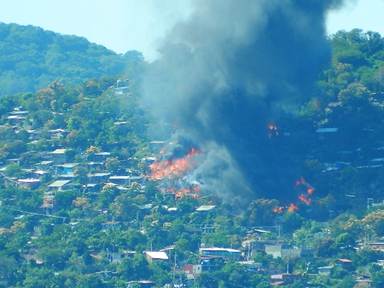
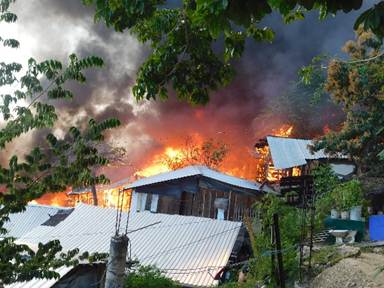
Figure 1. Fire occurred on December 23, 2018
Courtesy: Zihuatanejo Civil Protection
Although the fire site was located only about 1.5 km in distance from the fire station, the narrow mountain roads significantly delayed access, and it took several tens of minutes for fire engines to arrive. As a result, the first responders on scene were CERT members from a nearby community. In a post-fire interview, the CERT leader explained: “We received reports from residents that smoke was rising. I instructed CERT members to gather with their equipment and head to the site.” The equipment referred to basic protective gear provided upon completion of CERT training, such as fire-resistant gloves, goggles, helmets, flashlights, and masks. Upon arrival, CERT members observed residents remaining inside their homes to retrieve belongings and valuables despite the approaching fire, as well as crowds of onlookers standing by without taking action. CERT members therefore guided residents out of their homes, organized bucket relay among the crowd, and requested cooperation from a water tank truck that happened to be delivering water at the time (Figure 2). These efforts contributed to slowing the spread of the fire and protecting the lives of the local residents.
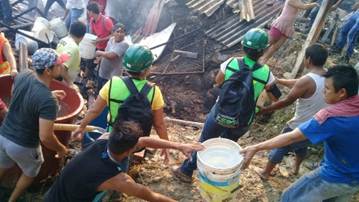
Figure 2. organized bucket relay among the residents
Courtesy: Zihuatanejo Civil Protection
Subsequently, the Zihuatanejo Fire Department, the State Civil Protection, and the Red Cross arrived at the scene, and CERT members supported firefighting operations in coordination with these public and non-governmental agencies. Because approximately 100 homes were destroyed, many residents lost their housing and evacuation shelters were opened. CERT members also volunteered to assist with shelter management.
The following section describes the process through which CERTs came to take on a proactive role in disaster response.
3. Establishment of CERTs
(1) Chile Training as the motivation for CERT Formation
When the author began visiting Zihuatanejo in July 2016, no community-based disaster risk reduction groups had yet been established in Zihuatanejo. The author therefore explained to Mr. A, an official in the Zihuatanejo Civil Protection, that in Japan, community-based disaster risk reduction organizations are formed in many communities and have demonstrated effectiveness in promoting disaster preparedness and response. The author also introduced a CERT training program organized by the Japan International Cooperation Agency (JICA), scheduled to be held in Chile between April and May 2017. Mr. A expressed interest, was recommended by the author, and subsequently participated in the training.
In Chile, Mr. A learned about CERT organizational structures and training components such as search and rescue and fire safety, and he returned to Mexico certified as a CERT instructor. Together with the author, Mr. A then began working toward the establishment of CERTs in Zihuatanejo.
(2) Preparations for CERT Establishment
Several challenges were encountered in establishing CERTs in Zihuatanejo. One major challenge was team building for training implementation. Because the Zihuatanejo CERT structure consisted of four brigades—first aid, firefighting, search and rescue, and incident command—it was necessary to secure trainers for each brigade. Members were selected from the Civil Protection and the Fire Department, and detailed coordination and information sharing were conducted regarding CERT objectives and training methods. Workshops were also held to strengthen team cohesion and coordination.
Another challenge involved explaining the importance of community-based disaster risk reduction groups to local communities. In Japan, neighborhood associations often serve as the foundation for community disaster risk reduction organizations. In contrast, such local governance structures were absent or weak in Zihuatanejo. As a result, identifying whom to approach and how to disseminate information within communities became key issues.
The initial approach involved visiting influential community leaders to explain the CERT concept. When these leaders expressed interest, they were asked to encourage potential participants within their communities. Even so, it was not possible to immediately recruit sufficient numbers. Repeated visits were made to the same communities, beginning with small groups of residents and gradually expanding participation as interested individuals invited friends. Once approximately twenty potential CERT members were assembled, CERT training for that community was initiated.
(3) CERT Training
As noted above, CERTs were organized into four brigades— first aid, firefighting, search and rescue, and incident command—and training corresponding to each brigade was provided. In addition, training on psychological care during disasters was incorporated. The program consisted of several tens of hours combining classroom instruction and practical exercises.
The culmination of the training was a full-scale exercise simulating an actual disaster scene. In areas with many wooden structures, full-scale wooden houses were used to recreate scenarios involving earthquake damage, falling debris causing injuries, and subsequent fire outbreaks (Figure 3, left). CERT members practiced a sequence of actions including scene safety assessment, internal situation checks, victim search and assessment, transport and triage, identification of fire sources, and initial fire suppression using extinguishers.
Because Zihuatanejo also contains five-story apartment buildings, training was conducted in actual apartment units (Figure 3, right). Smoke generators were used to limit visibility, and CERT members practiced evacuation guidance, victim search, and rescue procedures under realistic conditions. Members who completed all training components were certified as CERT members. By the end of 2017, 45 CERT members had been trained across two community areas. It was after completing this training that the December 2018 fire occurred.
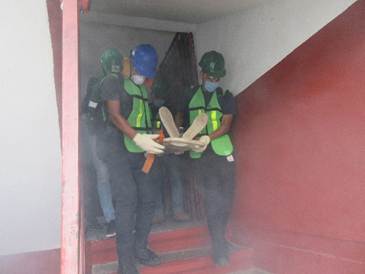
Figure 3. Training in the wooden structure (left), Training in the five-story building (right)
4. Expansion of CERT Activities
The CERT response during the December 2018 fire attracted significant attention from surrounding residents and the Zihuatanejo municipal government. As a result, CERTs were formally incorporated into the municipal disaster risk management plan. Furthermore, for the first time in Zihuatanejo, joint disaster drills were conducted involving four actors: the community-based CERTs, governmental organizations such as the State Civil Protection Agency and the Zihuatanejo Fire Department, and the NGO Red Cross. These drills simulated earthquake and fire scenarios and led to more active initiatives.
Two key insights emerge from this study: local capacity building and sustained researcher accompaniment. Typically, when external supporters such as NGOs or researchers engage in community disaster risk reduction, they often deliver training directly. In contrast, this study adopted a model in which training was first provided to a local civil protection officer, Mr. A, who then served as the central instructor for CERT training. The researcher acted as a companion to Mr. A, providing expert input—such as training scenarios—across all phases from program design to exercise implementation, while consistently emphasizing that implementation authority resided with locality.
This mode of engagement helped sustain the proactive commitment of civil protection and fire department personnel to CERT establishment. This approach also suggests the potentials of taking fire safety measures at the communities with non-engineered housing throughout the capacity building and reduce the impact once the fire occur as communities themselves can attend immediately to the fire incident.
References
[1] FEMA: Federal Emergency Management Agency, 2025, Community Emergency Response Team (CERT). Effective February 10, 2026. https://www.fema.gov/emergency-managers/individuals-communities/preparedness-activities-webinars/community-emergency-response-team.
[2] Fire Emergency New Zealand, 2026, Different ways to volunteer. Effective February 10, 2026. https://www.fireandemergency.nz/work-or-volunteer-for-us/volunteering/different-ways-to-volunteer/.
[3] Lewin, K. 1946. “Action research and minority problems.” Journal of Social Issues 2 (4). 34–46.
[4] Nakai, F. & Nakano, G., 2023. “Community-mediated individual disaster preparedness practices: A case study in Kochi, Japan.” International Journal of Disaster Risk Reduction Vol 86. 103532. https://doi.org/10.1016/j.ijdrr.2023.103532.
[5] Shiroshita, H., Jayaratne, R. & Kitagawa, K. 2024. “Integrating communities’ perspectives in understanding disaster risk.” Natural Hazards 120, 8263–8282. https://doi.org/10.1007/s11069-024-06452-0.
[6] Sugiyama, T. & Yamori, K. 2022. “Analysis of regional response and development of disaster prevention teaching materials for “Nankai Trough Earthquake Extra Information”. IDRiM Journal 12.1. 24-38.
[7] Tomeno, R., Toyoda, Y., & Kanegae, H,. 2024. “A study on promoting proactive activities of Voluntary Disaster Management Organization through Evacuation Shelter Operations Gaming in Fukakusa elementary school district, Fushimi ward, Kyoto city.” Journal of Social Safety Science Vol. 44, 207-216.