Yes there are two paths you can go by: A story of fire safety in Salisbury Tower
By: Michael Spearpoint, OFR Consultants, Manchester, England, UK
Andrew Basford, OFR Consultants, Manchester, England, UK
Context
The government in England recently announced [1] a change to the statutory fire safety guidance given in Approved Document B (AD B) [2], [3] to be amended [4] to have two stairs in high-rise residential buildings over 18 m tall. This announcement was accompanied by the release of research commissioned by the government on means of escape from high-rise residential buildings [5], of which some of this work has been discussed in Issue 27 of SFPE Europe [6] and presented at the SFPE Conference on Performance-Based Design.
Regular readers of SFPE Europe may recall a previous article related to an iconic piece of rock music and fire safety engineering – how Deep Purple’s song ‘Smoke on the Water’ describes the events surrounding the fire at Montreux Casino [7]. When contemplating the topic of stairs, if you were to ask fans of classic rock music to name a song that refers to them, it is likely they will mention ‘Stairway to Heaven’ by Led Zeppelin. The song appears on the November 1971 released album commonly known as Led Zeppelin IV. This article is the second in what might become an occasional series that looks at the historical connections between fire safety engineering and music.
Salisbury Tower
Post World War Two during the latter 1950s and through the 1960s Britain underwent a major period of construction. Many cities and towns had been damaged during the fighting, but also much of the building stock consisted of homes of poor quality. Whole areas were cleared, and new high-rise buildings were constructed. It is beyond the scope of this article to delve into the social and technological impact of these changes, but the reader is directed to publications such as that of Glendinning and Muthesius [8] and Boughton [9].
The back cover of Led Zeppelin IV shows a high-rise tower behind some derelict houses (Figure 1). Two members of Led Zeppelin were born in the region of England referred to as the Midlands in which Birmingham is the major urban area. This high-rise tower has been identified as Salisbury Tower in the Ladywood area of Birmingham.
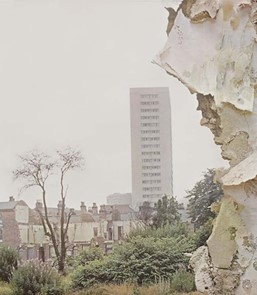
Figure 1. The image on the back of Led Zeppelin IV showing Salisbury Tower behind derelict houses. Date unknown, but given the album was released in November 1971 and construction of the tower completed in 1968, then the photograph would have been taken somewhere between 1968 and 1971.
Salisbury Tower, and its sister building Canterbury Tower (Figure 2), were approved in 1965 through the then Birmingham County Borough Council and completed in 1968 by Wimpey. It is a concrete frame structure with masonry and concrete panel external walls. The building has 20 stories, around 57 m tall and contains 116 flats. The building has a single stair and two separate lifts. At the time of its construction residents had access to open balconies.
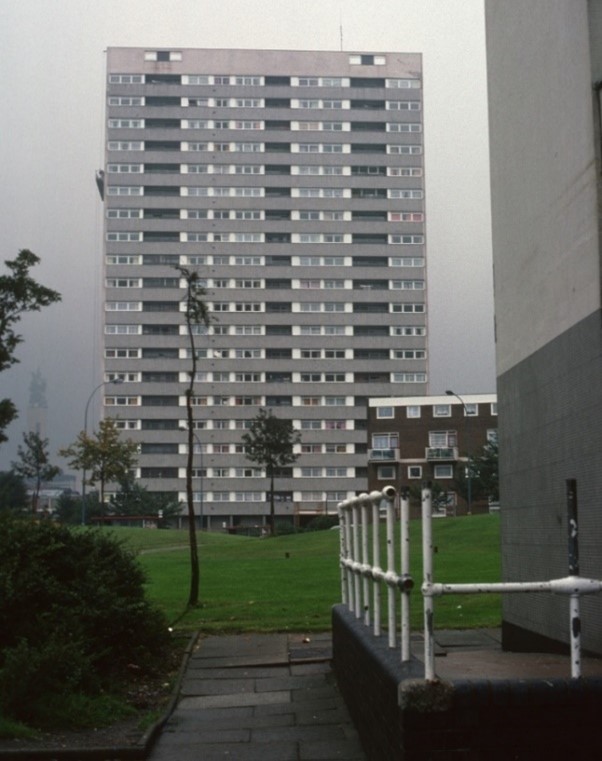
Figure 2. Photograph of Canterbury Tower taken from Salisbury Tower in 1987. Note the open balconies which were likely similar on Salisbury Tower before being enclosed in the mid-1990s. Photograph by Miles Glendinning, available from the University of Edinburgh DataShare repository at datashare.ed.ac.uk/.
The current evacuation strategy for the building is what is referred to as ‘stay put’ as described in clause 3.3 of AD B Vol 1 [2] and there is no reason to think that this has not changed since the building was built. There have been concerns expressed by some parties [10] about stay put. This debate beyond the scope of this article but the strategy was considered within the means of escape research [5].
Chronology
Although Salisbury Tower has not experienced a major fire, there have been two mentioned in the media that are of interest which are discussed below. The building may have experienced other fires, but if so, these apparently are not reported in the available media.
The first fire occurred on 22 June 1977. There is not a great deal of information available in the archives, but it seems that a fire ensued in a flat on the 14th floor. This resulted in a complete evacuation of the building. Two letters to contemporary newspapers after the fire (Figure 3) indicate that elderly and infirm residents, and at least one bed-ridden resident were evacuated during the incident. Unfortunately, there is no further indication of why the bed-ridden resident needed to be evacuated nor whether this was done via the stairs or by using a lift.
|
Wonderful job
On behalf of the residents of Salisbury Tower, I would like to thank all concerned for help given in the recent fire.
Special thanks to the fire service and police, who did a wonderful job, especially in the help they gave to the aged and infirm.
Many thanks to the staff of the Home for the Handicapped who provided the never-ending supply of cups of tea!
Irene Morris
Salisbury Tower,
Birmingham 18
|
No easy task
Being a resident of Salisbury Tower, I wish to express my very grateful thanks and admiration to our truly brave firemen and police for doing their duty in the recent fire.
They helped to remove my invalid, bed-ridden mother to safety from the 16th floor during the fire – no easy task.
It was a truly horrific experience for us all, and to these men we owe a debt of gratitude.
J. Bradley
Salisbury Tower
|
Figure 3. The text from two letters reproduced from the Evening Mail, Monday, June 22, 1977.
In the mid 1990’s the tower had the original windows replaced, and its balconies enclosed [11]. The façade was overclad in an insulated render system. It would also appear that at some point sprinklers were retrofitted to all the communal waste bin areas but not the flats themselves, although when this took place has not been found.
In response to the Grenfell Tower fire in 2017, Birmingham City Council announced a £31 million plan to retrofit 213 high-rise residential buildings with sprinklers [12] of which Salisbury Tower was included in the programme. After some debate over the life safety effectiveness of sprinkler systems [13], a residential system conforming to BS 9251:2014 [14] was fitted. Sprinkler heads were installed in the flats but not in the common areas. An image from a post-incident video interview described below would suggest that these are concealed, sidewall devices (Figure 4). It is unclear whether the sprinkler system was linked to an alarm receiving centre, as recommended by clause 5.13.4 in BS 9251.
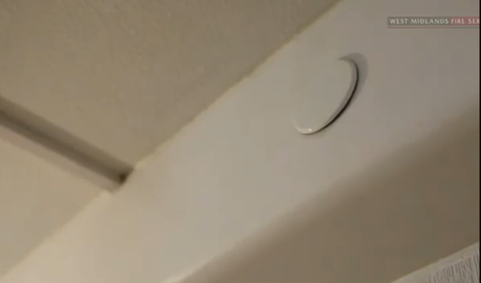
Figure 4. Image taken from an interview published by West Midlands Fire and Rescue Service that suggests the sprinklers installed in Salisbury Tower are concealed, sidewall devices.
This brings us to the second fire that has been covered by the media which is of current interest. This incident was identified through the ongoing project on behalf of the Building Safety Regulator (BSR) at the Health and Safety Executive (HSE) to investigate fires that might have an impact on fire safety regulations and guidance in England. It occurred at 02:00 on 12 April 2023 [15] in which an e-bike under charge in the corridor of a flat caught fire. The residents of the flat called West Midlands Fire Service (WMFS) as a result. The fire prevented them from escaping and instead media report that the family of three sought safety on their balcony (now enclosed since the 1990s), accessed through the bedroom. By the time WMFS personnel arrived 3 min later the sprinkler had extinguished the fire. In a subsequent video interview with one of the residents, speaking in Amharic, Hana Woldemara said “We couldn’t get out. We were on the tenth floor. It was too high. I can tell you for sure that the sprinklers saved our lives. It is brilliant they were installed in the first place” [16].
Upgrades
Currently Salisbury Tower is used to provide rented housing for people over 55 years. The building façade and other elements are going through an upgrade (Figure 5). Plans submitted by Equans and AHP Architects & Surveyors [11] to Birmingham City Council note that the 1990s render system has reached the end of its lifespan and is to be replaced with non-combustible mineral wool insulation which will be mechanically fixed to the existing structure, ground floor brick slips and upper level reinforced thin-coat render finishing. This façade system is to meet class A2 or better for reaction-to-fire performance [17] to meet the requirements of the Building Regulations for external walls of specified buildings that were introduced in December 2018 following the Grenfell Tower fire. The stairwell will have automatically openable vents installed on every level further enhancing the fire safety measures provided to the building.
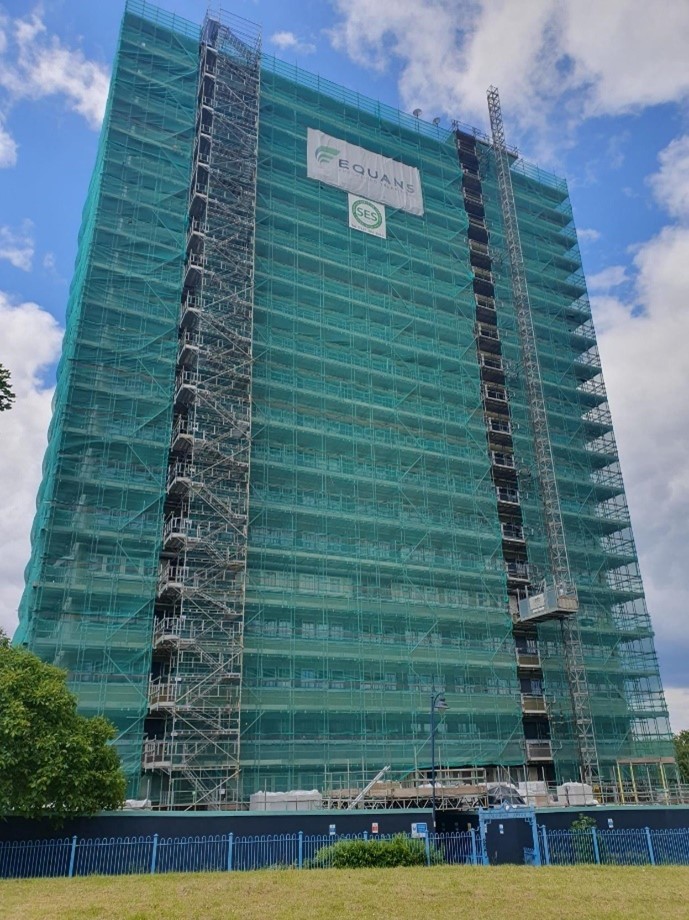
Figure 5. Ongoing upgrade to the façade of Salisbury Tower.
Conclusions
This article tells a fire safety-related story of a high-rise residential building that just happens to have a particularly iconic status to some individuals. Many people rightly reflect on the disastrous events surrounding Grenfell Tower; however, the fire safety history of Salisbury Tower likely reflects that of many similar high-rise residential buildings across the UK. Buildings undergo changes throughout their life as circumstances evolve – construction elements reach the end of their expected lifespan, the items people bring into their homes vary over time, and major outside events can have a significant and lasting impact on the building.
In the two incidents at Salisbury Tower the provision of a single stair did not impact on the outcomes. In the 1977 fire it appears that residents were successfully evacuated with the assistance of the emergency services. In the 2023 e-bike fire, the location of the fire prevented occupants leaving their flat and the resident inferred that getting out of the building from the tenth floor of the building would have been challenging. In any case the retrofitting of the sprinkler system post-2017 probably prevented internal fire spread fire. The discharge of water would have helped maintain tenable conditions and allowed firefighters to carry out operations to safety evacuate the residents. This benefit was achieved even though BS 9251 sprinkler systems are not specifically designed to suppression li-ion battery fires. As revealed above, Birmingham City Council’s plan to fit sprinklers to their existing tower block stock led to debate about their effectiveness. The cost-benefit of retrofitting sprinklers has been investigated by Arnott et al. [18] using the judgement value approach.
Finally, at the time of writing the SFPE UK chapter has been working on drafting some practical guidance on the storage of e-bikes in commercial buildings such as offices, which hopefully will be made publicly available at some point. It might be this guidance could be extended to residential buildings, although these occupancies need additional consideration when compared with commercial buildings. Residential buildings obviously include sleeping risks, different management regimes, etc.
Acknowledgement
The means of escape from high-rise residential buildings research and the ‘real fires’ project are both supported by the Building Safety Regulator (BSR) at the Health and Safety Executive (HSE).
References
[1] UK Parliament, ‘Ministerial Statement UIN HCWS413’. [Online]. Available: questions-statements.parliament.uk/written-statements/detail/2024-04-17/HCWS413
[2] HM Government, ‘The Building Regulations 2010, Approved Document B (Fire Safety) Volume 1: Dwellings (2019 edition incorporating 2020 and 2022 amendments)’, Dec. 2022.
[3] HM Government, ‘The Building Regulations 2010, Approved Document B (Fire Safety) Volume 2: Buildings other than dwellinghouses (2019 edition incorporating 2020 and 2022 amendments)’, Dec. 2022.
[4] HM Government, ‘The Building Regulations 2010, Amendments to the Approved Documents (March 2024)’, 2024.
[5] Health and Safety Executive, ‘Means of escape in residential buildings research’. [Online]. Available: www.gov.uk/government/publications/means-of-escape-in-residential-buildings-research
[6] A. Templeton, C. Nash, M. Spearpoint, S. Gwynne, and H. Xie, ‘Trusted source, trusted information, trusted support: The role of trust in resident emergency response’, SFPE Europe, no. 27, 2023.
[7] M. J. Spearpoint and J. Clark, ‘Fire in the sky: A look back at the Montreux Casino fire’, SFPE Europe, no. 25, 2022.
[8] M. Glendinning and S. Muthesius, Tower block: Modern public housing in England, Scotland, Wales and Northern Ireland. New Haven and London: Yale University Press, 1993.
[9] J. Boughton, Municipal dreams: The rise and fall of council housing. London, England, UK: Verso, 2018.
[10] M. Wrack, ‘The Grenfell Tower Inquiry phase 1 report and the “stay put” policy (Letter published by the Fire Brigades Union)’, Oct. 25, 2019.
[11] Equans and AHP Architects & Surveyors, ‘Salisbury Tower upgrade works’, Dec. 2022.
[12] Birmingham City Council, ‘Council to fit sprinklers in tower blocks’. [Online]. Available: www.birmingham.gov.uk/news/article/89/council_to_fit_sprinklers_in_tower_blocks
[13] N. Elkes, ‘Sprinklers to protect city tower block residents would be “ridiculous”, says expert’, Birmingham Live. [Online]. Available: www.birminghammail.co.uk/news/midlands-news/sprinklers-protect-city-tower-block-14293030
[14] ‘BS 9251:2014 Fire sprinkler systems for domestic and residential occupancies. Code of practice’, BSI, London, 2014.
[15] The British Automatic Sprinkler Association, ‘Birmingham tall building lithium-ion battery fire sprinkler save’. [Online]. Available: www.sprinklersaves.co.uk/saves/birmingham-tall-building-lithium-ion-battery-fire-sprinkler-save/
[16] West Midlands Fire Service, ‘Ladywood mum praises “life-saving” sprinkler system after fire in tenth-floor flat’. [Online]. Available: www.wmfs.net/news/ladywood-mum-praises-life-saving-sprinkler-system-after-fire-in-tenth-floor-flat/
[17] BSI, ‘BS EN 13501-1:2018 Fire classification of construction products and building elements. Classification using data from reaction to fire tests’, BSI, London, 2018.
[18] M. Arnott, D. Hopkin, and M. Spearpoint, ‘Application of a judgement method to regulatory impact assessments for sprinkler protection to English high-rise residential buildings’, Fire and Materials, 2020, doi: 10.1002/fam.2858.